Anthropology: A Degree In A Book
This non-fiction guide offers a clear, visually driven introduction to anthropology, combining accessible explanations with engaging visuals to illuminate how cultures are studied and how people live around the world. Its central theme is understanding humanity through fieldwork, language, kinship, and everyday practices, linking theory to modern life. It’s designed for curious learners and students of all ages, as well as anyone who enjoys thoughtful explorations of culture. The tone is informative yet inviting, balancing rigor with enthusiasm to spark curiosity.
Content is presented as a richly illustrated reference, pairing concise chapters with full-color infographics, timelines, diagrams, and quick summaries. It covers core strands—from fieldwork and ethnography to biological anthropology, language and cognition, and how cultures exchange goods and ideas—showing how these ideas connect to real-world experiences and everyday decisions. Applied anthropology is highlighted to show how theory translates into everyday life.
Readers move through the material at their own pace, guided by clear explanations and helpful sidebars. The visual approach makes complex concepts approachable, turning dense ideas into memorable patterns you can revisit, compare, and discuss. Practical examples invite reflection and dialogue, making learning feel accessible and enjoyable.
- Core topics covered: fieldwork and ethnography; biological anthropology; language and cognition; gifting and economic systems; exchange and globalization
- Learning outcomes: cultural literacy, analytical thinking, and the ability to apply anthropological concepts to everyday life
- Illustration and writing style: full-color infographics, flow charts, diagrams, and concise summaries
- Interactive or standout features: timelines, information boxes, feature spreads, and margin annotations for quick reference
After finishing, readers gain a solid foundation in anthropology, plus the confidence to explore new cultures with curiosity and respect. It builds a habit of critical thinking about human behavior, enhances cultural awareness, and leaves a lasting appreciation for both diversity and shared humanity.
Product Information
Product Information
Shipping & Returns
Shipping & Returns
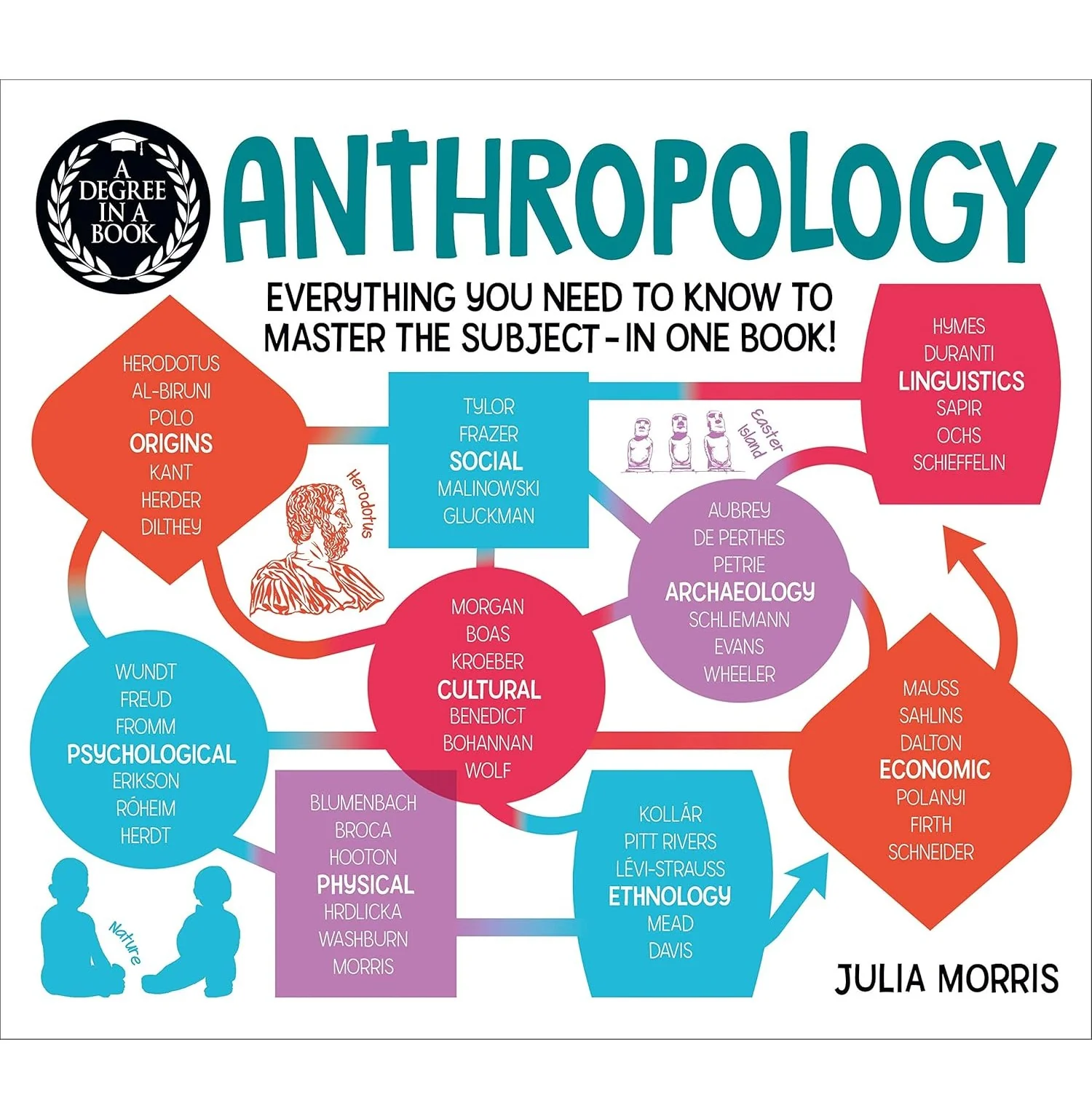
Anthropology: A Degree In A Book
Anthropology: A Degree In A Book
This non-fiction guide offers a clear, visually driven introduction to anthropology, combining accessible explanations with engaging visuals to illuminate how cultures are studied and how people live around the world. Its central theme is understanding humanity through fieldwork, language, kinship, and everyday practices, linking theory to modern life. It’s designed for curious learners and students of all ages, as well as anyone who enjoys thoughtful explorations of culture. The tone is informative yet inviting, balancing rigor with enthusiasm to spark curiosity.
Content is presented as a richly illustrated reference, pairing concise chapters with full-color infographics, timelines, diagrams, and quick summaries. It covers core strands—from fieldwork and ethnography to biological anthropology, language and cognition, and how cultures exchange goods and ideas—showing how these ideas connect to real-world experiences and everyday decisions. Applied anthropology is highlighted to show how theory translates into everyday life.
Readers move through the material at their own pace, guided by clear explanations and helpful sidebars. The visual approach makes complex concepts approachable, turning dense ideas into memorable patterns you can revisit, compare, and discuss. Practical examples invite reflection and dialogue, making learning feel accessible and enjoyable.
- Core topics covered: fieldwork and ethnography; biological anthropology; language and cognition; gifting and economic systems; exchange and globalization
- Learning outcomes: cultural literacy, analytical thinking, and the ability to apply anthropological concepts to everyday life
- Illustration and writing style: full-color infographics, flow charts, diagrams, and concise summaries
- Interactive or standout features: timelines, information boxes, feature spreads, and margin annotations for quick reference
After finishing, readers gain a solid foundation in anthropology, plus the confidence to explore new cultures with curiosity and respect. It builds a habit of critical thinking about human behavior, enhances cultural awareness, and leaves a lasting appreciation for both diversity and shared humanity.
Product Information
Product Information
Shipping & Returns
Shipping & Returns
Description
This non-fiction guide offers a clear, visually driven introduction to anthropology, combining accessible explanations with engaging visuals to illuminate how cultures are studied and how people live around the world. Its central theme is understanding humanity through fieldwork, language, kinship, and everyday practices, linking theory to modern life. It’s designed for curious learners and students of all ages, as well as anyone who enjoys thoughtful explorations of culture. The tone is informative yet inviting, balancing rigor with enthusiasm to spark curiosity.
Content is presented as a richly illustrated reference, pairing concise chapters with full-color infographics, timelines, diagrams, and quick summaries. It covers core strands—from fieldwork and ethnography to biological anthropology, language and cognition, and how cultures exchange goods and ideas—showing how these ideas connect to real-world experiences and everyday decisions. Applied anthropology is highlighted to show how theory translates into everyday life.
Readers move through the material at their own pace, guided by clear explanations and helpful sidebars. The visual approach makes complex concepts approachable, turning dense ideas into memorable patterns you can revisit, compare, and discuss. Practical examples invite reflection and dialogue, making learning feel accessible and enjoyable.
- Core topics covered: fieldwork and ethnography; biological anthropology; language and cognition; gifting and economic systems; exchange and globalization
- Learning outcomes: cultural literacy, analytical thinking, and the ability to apply anthropological concepts to everyday life
- Illustration and writing style: full-color infographics, flow charts, diagrams, and concise summaries
- Interactive or standout features: timelines, information boxes, feature spreads, and margin annotations for quick reference
After finishing, readers gain a solid foundation in anthropology, plus the confidence to explore new cultures with curiosity and respect. It builds a habit of critical thinking about human behavior, enhances cultural awareness, and leaves a lasting appreciation for both diversity and shared humanity.