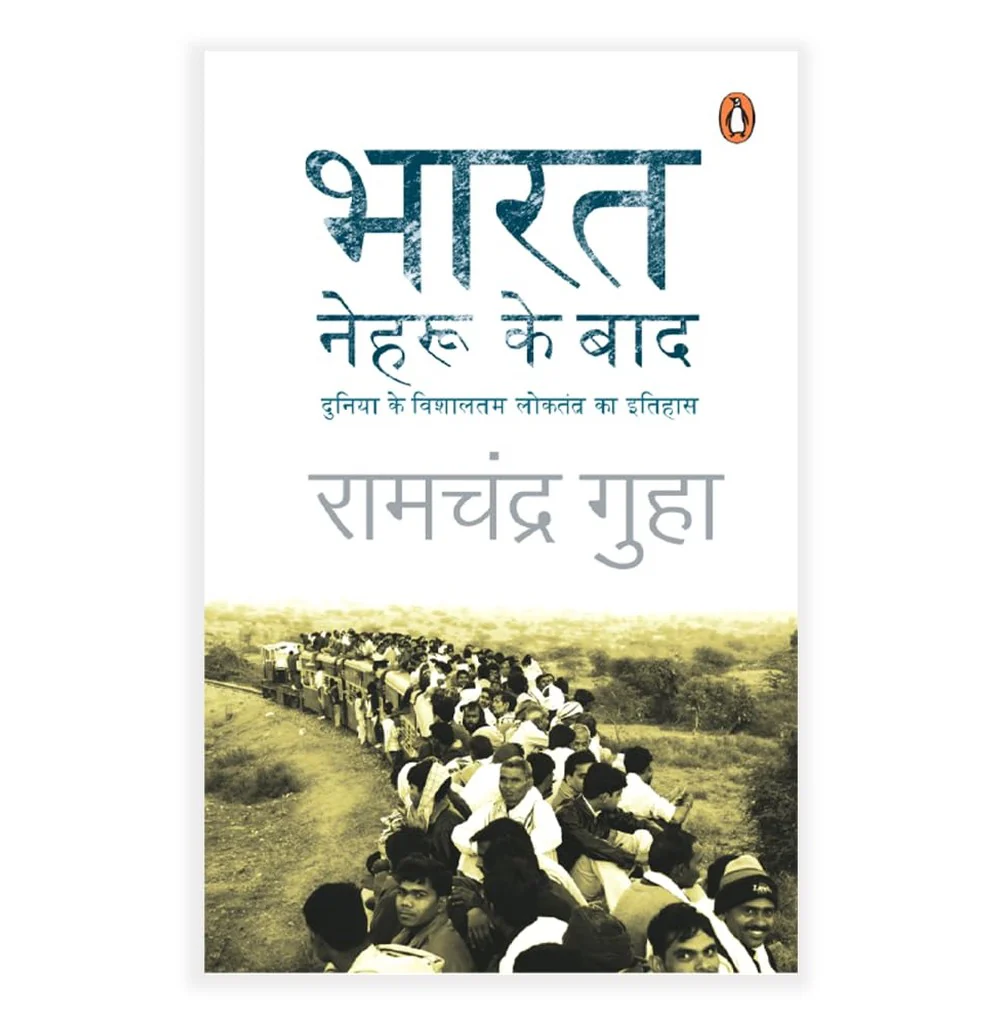
Bharat Nehru Ke Baad Duniya Ke Vishaltam Loktantra Ka Itihaas (Hin)
This non-fiction history book offers a rigorous, evidence-based examination of India’s political, social, and economic changes since independence, focusing on the era after a pivotal moment in 1964. It traces how Indian democracy has faced internal tensions and transformed in response to new challenges. The book is written for students, researchers, and curious readers who want a clear, balanced understanding of modern India's political landscape. The tone is thoughtful, measured, and insightful, blending scholarly analysis with accessible storytelling to illuminate complex history. It is designed to support interactive learning and active engagement with sources.
The content is presented as a thorough, evidence-driven narrative that moves chronologically while weaving in social and economic context. The translation preserves the original’s careful approach and lucid prose, making dense political history approachable for Hindi readers without sacrificing nuance.
What makes the reading experience distinctive is the balanced treatment of upheavals and reforms, showing how democracy repeatedly renews itself. By tracing the interplay of Emergency-era decisions, language and regional movements, globalization, social justice struggles, and economic reforms, the book offers a holistic view of India’s evolving democracy. It also highlights how regional parties and coalition politics reshaped national governance, and how contemporary challenges emerged from enduring social currents. Across chapters, readers explore concepts such as democratic resilience, federal dynamics, coalition politics, regionalism, globalization, and social justice movements, learning to connect historical trends to today’s policy debates.
- Post-independence political landscape, Emergency, language and regional movements, globalization and economic reform, social justice movements, regional party dynamics and coalitions
- Learning outcomes include a nuanced understanding of how democracy adapts to changing social and economic pressures; connect historical trends to present-day political realities; strengthen critical reading of political history
- Illustration or writing style: faithful translation with preserved sensitivity and structure; clear, precise, evidence-based writing; accessible prose that invites deeper study
- Interactive or standout features: well-structured, chapter-guided flow that supports learning and reflection; emphasis on cause-and-effect across decades to illuminate long-term patterns
What the reader gains after finishing is a deeper, contextual understanding of the roots and evolution of India’s democratic system, along with the ability to relate past events to current issues. It nurtures curiosity, critical thinking, and a more informed perspective on how democracy endures and adapts in a diverse and rapidly changing nation.
Product Information
Product Information
Shipping & Returns
Shipping & Returns
Bharat Nehru Ke Baad Duniya Ke Vishaltam Loktantra Ka Itihaas (Hin)
Bharat Nehru Ke Baad Duniya Ke Vishaltam Loktantra Ka Itihaas (Hin)
This non-fiction history book offers a rigorous, evidence-based examination of India’s political, social, and economic changes since independence, focusing on the era after a pivotal moment in 1964. It traces how Indian democracy has faced internal tensions and transformed in response to new challenges. The book is written for students, researchers, and curious readers who want a clear, balanced understanding of modern India's political landscape. The tone is thoughtful, measured, and insightful, blending scholarly analysis with accessible storytelling to illuminate complex history. It is designed to support interactive learning and active engagement with sources.
The content is presented as a thorough, evidence-driven narrative that moves chronologically while weaving in social and economic context. The translation preserves the original’s careful approach and lucid prose, making dense political history approachable for Hindi readers without sacrificing nuance.
What makes the reading experience distinctive is the balanced treatment of upheavals and reforms, showing how democracy repeatedly renews itself. By tracing the interplay of Emergency-era decisions, language and regional movements, globalization, social justice struggles, and economic reforms, the book offers a holistic view of India’s evolving democracy. It also highlights how regional parties and coalition politics reshaped national governance, and how contemporary challenges emerged from enduring social currents. Across chapters, readers explore concepts such as democratic resilience, federal dynamics, coalition politics, regionalism, globalization, and social justice movements, learning to connect historical trends to today’s policy debates.
- Post-independence political landscape, Emergency, language and regional movements, globalization and economic reform, social justice movements, regional party dynamics and coalitions
- Learning outcomes include a nuanced understanding of how democracy adapts to changing social and economic pressures; connect historical trends to present-day political realities; strengthen critical reading of political history
- Illustration or writing style: faithful translation with preserved sensitivity and structure; clear, precise, evidence-based writing; accessible prose that invites deeper study
- Interactive or standout features: well-structured, chapter-guided flow that supports learning and reflection; emphasis on cause-and-effect across decades to illuminate long-term patterns
What the reader gains after finishing is a deeper, contextual understanding of the roots and evolution of India’s democratic system, along with the ability to relate past events to current issues. It nurtures curiosity, critical thinking, and a more informed perspective on how democracy endures and adapts in a diverse and rapidly changing nation.
Product Information
Product Information
Shipping & Returns
Shipping & Returns
Description
This non-fiction history book offers a rigorous, evidence-based examination of India’s political, social, and economic changes since independence, focusing on the era after a pivotal moment in 1964. It traces how Indian democracy has faced internal tensions and transformed in response to new challenges. The book is written for students, researchers, and curious readers who want a clear, balanced understanding of modern India's political landscape. The tone is thoughtful, measured, and insightful, blending scholarly analysis with accessible storytelling to illuminate complex history. It is designed to support interactive learning and active engagement with sources.
The content is presented as a thorough, evidence-driven narrative that moves chronologically while weaving in social and economic context. The translation preserves the original’s careful approach and lucid prose, making dense political history approachable for Hindi readers without sacrificing nuance.
What makes the reading experience distinctive is the balanced treatment of upheavals and reforms, showing how democracy repeatedly renews itself. By tracing the interplay of Emergency-era decisions, language and regional movements, globalization, social justice struggles, and economic reforms, the book offers a holistic view of India’s evolving democracy. It also highlights how regional parties and coalition politics reshaped national governance, and how contemporary challenges emerged from enduring social currents. Across chapters, readers explore concepts such as democratic resilience, federal dynamics, coalition politics, regionalism, globalization, and social justice movements, learning to connect historical trends to today’s policy debates.
- Post-independence political landscape, Emergency, language and regional movements, globalization and economic reform, social justice movements, regional party dynamics and coalitions
- Learning outcomes include a nuanced understanding of how democracy adapts to changing social and economic pressures; connect historical trends to present-day political realities; strengthen critical reading of political history
- Illustration or writing style: faithful translation with preserved sensitivity and structure; clear, precise, evidence-based writing; accessible prose that invites deeper study
- Interactive or standout features: well-structured, chapter-guided flow that supports learning and reflection; emphasis on cause-and-effect across decades to illuminate long-term patterns
What the reader gains after finishing is a deeper, contextual understanding of the roots and evolution of India’s democratic system, along with the ability to relate past events to current issues. It nurtures curiosity, critical thinking, and a more informed perspective on how democracy endures and adapts in a diverse and rapidly changing nation.