Big Questions About The Universe
This is a children’s educational book about space—a non-fiction guide that answers the most common, and a few uncommon, questions about the universe and outer space. Curated by the staff at the Royal Observatory Greenwich, it aims to spark curiosity, explain core concepts, and invite thoughtful discussion. It’s written for curious readers who enjoy science, exploration, and friendly, age-appropriate explanations, with an uplifting, adventurous tone.
Readers travel through content as a story-led journey with two curious children and a robot programmed with all the answers. Chapters guide you through The Basics, The Solar System, Secrets of Stars, People in Space, and The Biggest Questions, mixing clear explanations with illustrations and real-world context. The book embraces what we know, plus what we don’t yet know, inviting questions, debate, and wonder, and it supports interactive learning by inviting readers to ask questions, test ideas, and discuss concepts with peers. It’s designed as a picture book for early readers while offering depth for older curious minds.
- Core chapters: The Basics, The Solar System, Secrets of Stars, People in Space, The Biggest Questions.
- Narrative guide: a friendly robot and two curious children lead readers through concepts with supportive illustrations.
- Illustrated, accessible explanations: complex ideas are presented with clear diagrams and concise text.
- Honest science: clear discussion of what we know and what we don’t, normalizing unknowns and encouraging inquiry.
- Classroom-ready prompts: questions and ideas that drive discussion and activity-based learning.
- Credible curation: crafted by experts from the Royal Observatory Greenwich for accuracy and relevance.
After finishing, readers gain a broader sense of wonder about the universe, greater confidence in asking questions, and a habit of lifelong curiosity. It encourages careful thinking, inspires exploration, and leaves a positive, lasting impression of science as a collaborative journey.
Product Information
Product Information
Shipping & Returns
Shipping & Returns
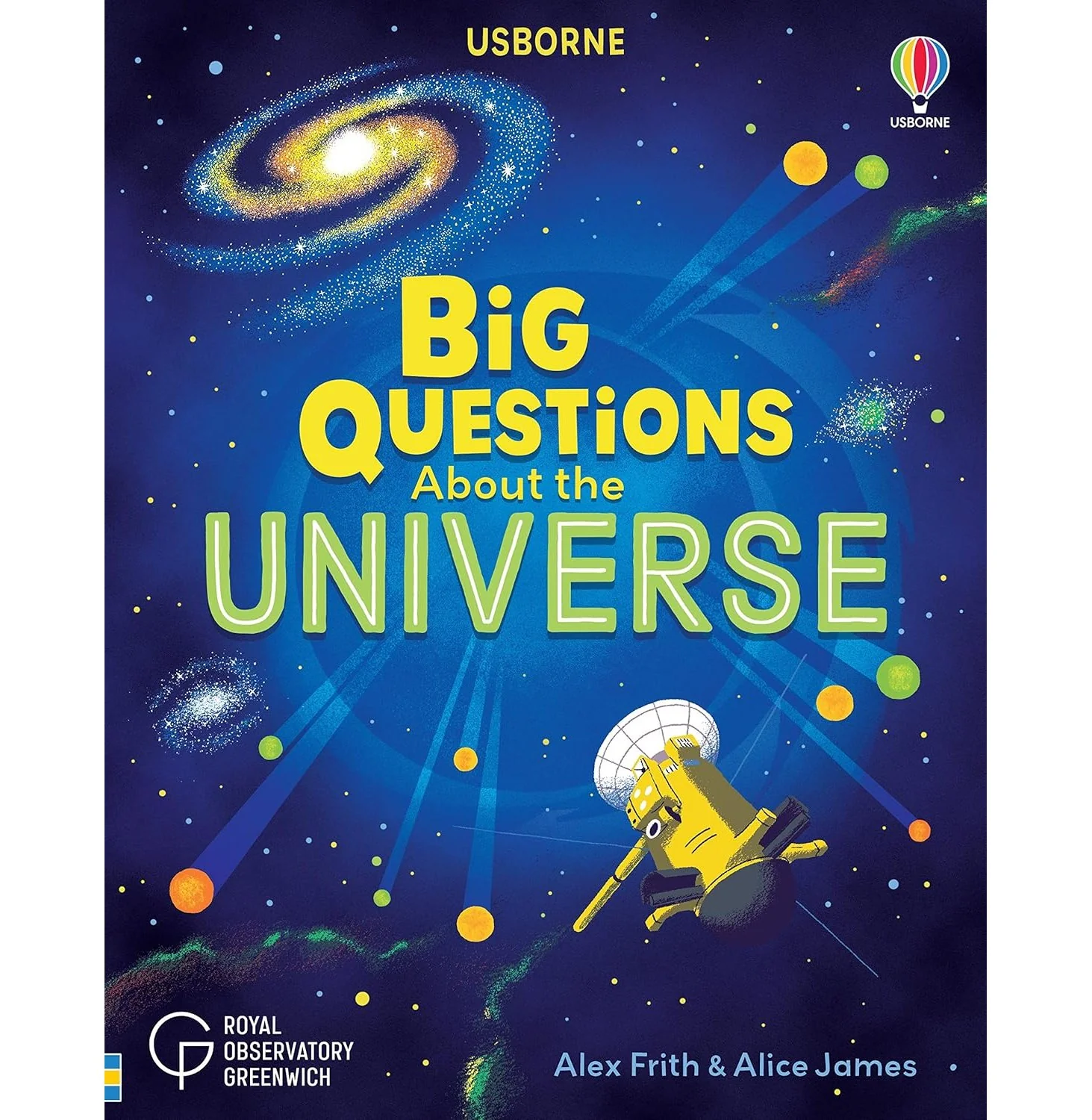
Big Questions About The Universe
Big Questions About The Universe
This is a children’s educational book about space—a non-fiction guide that answers the most common, and a few uncommon, questions about the universe and outer space. Curated by the staff at the Royal Observatory Greenwich, it aims to spark curiosity, explain core concepts, and invite thoughtful discussion. It’s written for curious readers who enjoy science, exploration, and friendly, age-appropriate explanations, with an uplifting, adventurous tone.
Readers travel through content as a story-led journey with two curious children and a robot programmed with all the answers. Chapters guide you through The Basics, The Solar System, Secrets of Stars, People in Space, and The Biggest Questions, mixing clear explanations with illustrations and real-world context. The book embraces what we know, plus what we don’t yet know, inviting questions, debate, and wonder, and it supports interactive learning by inviting readers to ask questions, test ideas, and discuss concepts with peers. It’s designed as a picture book for early readers while offering depth for older curious minds.
- Core chapters: The Basics, The Solar System, Secrets of Stars, People in Space, The Biggest Questions.
- Narrative guide: a friendly robot and two curious children lead readers through concepts with supportive illustrations.
- Illustrated, accessible explanations: complex ideas are presented with clear diagrams and concise text.
- Honest science: clear discussion of what we know and what we don’t, normalizing unknowns and encouraging inquiry.
- Classroom-ready prompts: questions and ideas that drive discussion and activity-based learning.
- Credible curation: crafted by experts from the Royal Observatory Greenwich for accuracy and relevance.
After finishing, readers gain a broader sense of wonder about the universe, greater confidence in asking questions, and a habit of lifelong curiosity. It encourages careful thinking, inspires exploration, and leaves a positive, lasting impression of science as a collaborative journey.
Original: $7.30
-70%$7.30
$2.19Product Information
Product Information
Shipping & Returns
Shipping & Returns
Description
This is a children’s educational book about space—a non-fiction guide that answers the most common, and a few uncommon, questions about the universe and outer space. Curated by the staff at the Royal Observatory Greenwich, it aims to spark curiosity, explain core concepts, and invite thoughtful discussion. It’s written for curious readers who enjoy science, exploration, and friendly, age-appropriate explanations, with an uplifting, adventurous tone.
Readers travel through content as a story-led journey with two curious children and a robot programmed with all the answers. Chapters guide you through The Basics, The Solar System, Secrets of Stars, People in Space, and The Biggest Questions, mixing clear explanations with illustrations and real-world context. The book embraces what we know, plus what we don’t yet know, inviting questions, debate, and wonder, and it supports interactive learning by inviting readers to ask questions, test ideas, and discuss concepts with peers. It’s designed as a picture book for early readers while offering depth for older curious minds.
- Core chapters: The Basics, The Solar System, Secrets of Stars, People in Space, The Biggest Questions.
- Narrative guide: a friendly robot and two curious children lead readers through concepts with supportive illustrations.
- Illustrated, accessible explanations: complex ideas are presented with clear diagrams and concise text.
- Honest science: clear discussion of what we know and what we don’t, normalizing unknowns and encouraging inquiry.
- Classroom-ready prompts: questions and ideas that drive discussion and activity-based learning.
- Credible curation: crafted by experts from the Royal Observatory Greenwich for accuracy and relevance.
After finishing, readers gain a broader sense of wonder about the universe, greater confidence in asking questions, and a habit of lifelong curiosity. It encourages careful thinking, inspires exploration, and leaves a positive, lasting impression of science as a collaborative journey.