Everybody'S Son
It’s a non-fiction economics book that digs into the forces behind the 2008 financial crisis. The central theme is that fragile incentives and risk dynamics within the global financial system—not simply greed—drove the upheaval. It’s written for curious adults, students, and policymakers eager to understand how economies work and how reforms can build lasting prosperity. The tone is clear, analytical, and hopeful, inviting thoughtful consideration of real-world solutions.
Content is presented through rigorous, accessible analysis that moves from global trends to concrete case studies. It blends data-driven reasoning with historical context, making complex ideas tangible. Its distinctive approach lies in tracing how decisions by banks, regulators, and homeowners were rational responses to a flawed landscape, then translating those insights into practical implications for policy and reform.
Readers explore macroeconomic concepts such as incentives, risk, regulation, monetary and fiscal policy, and development economics, with a special focus on India’s development path as a living reference. The work aims to make learning feel accessible and relevant, bridging theory and real-world outcomes without oversimplifying.
- In-depth, data-driven analysis of the financial crisis framed around incentives and risk
- Concepts covered include macroeconomics, financial regulation, policy trade-offs, and development economics
- Comparative lens on India’s development experience alongside other fast-growing economies
- Clear, accessible prose that connects theory to real-world decisions and current events
Readers come away with a sharper lens on what drives financial stability and growth, the trade-offs policymakers face, and how a developing democracy’s trajectory can inform broader economic thinking. The book leaves you with curiosity, confidence to discuss economic policy, and a nuanced view of global finance.
Product Information
Product Information
Shipping & Returns
Shipping & Returns
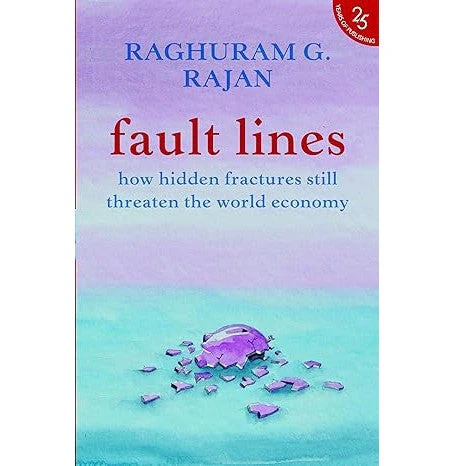
Everybody'S Son
Everybody'S Son
It’s a non-fiction economics book that digs into the forces behind the 2008 financial crisis. The central theme is that fragile incentives and risk dynamics within the global financial system—not simply greed—drove the upheaval. It’s written for curious adults, students, and policymakers eager to understand how economies work and how reforms can build lasting prosperity. The tone is clear, analytical, and hopeful, inviting thoughtful consideration of real-world solutions.
Content is presented through rigorous, accessible analysis that moves from global trends to concrete case studies. It blends data-driven reasoning with historical context, making complex ideas tangible. Its distinctive approach lies in tracing how decisions by banks, regulators, and homeowners were rational responses to a flawed landscape, then translating those insights into practical implications for policy and reform.
Readers explore macroeconomic concepts such as incentives, risk, regulation, monetary and fiscal policy, and development economics, with a special focus on India’s development path as a living reference. The work aims to make learning feel accessible and relevant, bridging theory and real-world outcomes without oversimplifying.
- In-depth, data-driven analysis of the financial crisis framed around incentives and risk
- Concepts covered include macroeconomics, financial regulation, policy trade-offs, and development economics
- Comparative lens on India’s development experience alongside other fast-growing economies
- Clear, accessible prose that connects theory to real-world decisions and current events
Readers come away with a sharper lens on what drives financial stability and growth, the trade-offs policymakers face, and how a developing democracy’s trajectory can inform broader economic thinking. The book leaves you with curiosity, confidence to discuss economic policy, and a nuanced view of global finance.
Product Information
Product Information
Shipping & Returns
Shipping & Returns
Description
It’s a non-fiction economics book that digs into the forces behind the 2008 financial crisis. The central theme is that fragile incentives and risk dynamics within the global financial system—not simply greed—drove the upheaval. It’s written for curious adults, students, and policymakers eager to understand how economies work and how reforms can build lasting prosperity. The tone is clear, analytical, and hopeful, inviting thoughtful consideration of real-world solutions.
Content is presented through rigorous, accessible analysis that moves from global trends to concrete case studies. It blends data-driven reasoning with historical context, making complex ideas tangible. Its distinctive approach lies in tracing how decisions by banks, regulators, and homeowners were rational responses to a flawed landscape, then translating those insights into practical implications for policy and reform.
Readers explore macroeconomic concepts such as incentives, risk, regulation, monetary and fiscal policy, and development economics, with a special focus on India’s development path as a living reference. The work aims to make learning feel accessible and relevant, bridging theory and real-world outcomes without oversimplifying.
- In-depth, data-driven analysis of the financial crisis framed around incentives and risk
- Concepts covered include macroeconomics, financial regulation, policy trade-offs, and development economics
- Comparative lens on India’s development experience alongside other fast-growing economies
- Clear, accessible prose that connects theory to real-world decisions and current events
Readers come away with a sharper lens on what drives financial stability and growth, the trade-offs policymakers face, and how a developing democracy’s trajectory can inform broader economic thinking. The book leaves you with curiosity, confidence to discuss economic policy, and a nuanced view of global finance.