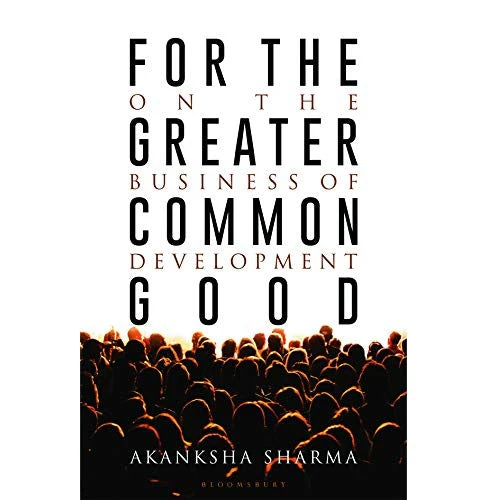
For The Greater Common Good
Non-fiction analysis of how global development happens in a world where private companies wield immense influence. The central theme is to deconstruct the blurred boundaries among business, government, and diplomacy to redefine the development agenda. It speaks to readers curious about economics, policy, and international affairs, from students to professionals, with a thoughtful, balanced, and hopeful tone about shared progress.
The book presents its argument through clear, accessible prose, grounded in real-world case studies, policy analysis, and data visuals. It traces how development decisions are shaped by corporate power, government priorities, and international institutions—and how these forces ripple through everyday life beyond headlines and headlines-worthy debates.
Readers will experience a distinctive cross-disciplinary approach that connects economics, diplomacy, ethics, and governance. Insightful narratives and diagrams help reveal how prosperity and sustainability can align, and how to evaluate proposals for the common good. The journey moves through global actors and policies to illustrate systemic interdependencies without getting lost in jargon, inviting you to trace how decisions at every level shape outcomes for communities.
- Case studies spanning business, policy, and philanthropy with real-world relevance
- Diagrams, maps, and data visuals that illuminate the development ecosystem
- End-of-section reflection prompts and thought experiments to deepen understanding
- Clear, engaging writing that blends analysis with accessible explanations
- Interactive learning elements and activity-based learning prompts to apply concepts
After finishing, readers gain a nuanced view of how the global economy shapes development, a sharper ability to assess policy choices, and a renewed sense of curiosity about the common good. It leaves you with increased confidence to form informed opinions, evaluate strategies, and imagine more inclusive paths to shared prosperity.
Product Information
Product Information
Shipping & Returns
Shipping & Returns
For The Greater Common Good
For The Greater Common Good
Non-fiction analysis of how global development happens in a world where private companies wield immense influence. The central theme is to deconstruct the blurred boundaries among business, government, and diplomacy to redefine the development agenda. It speaks to readers curious about economics, policy, and international affairs, from students to professionals, with a thoughtful, balanced, and hopeful tone about shared progress.
The book presents its argument through clear, accessible prose, grounded in real-world case studies, policy analysis, and data visuals. It traces how development decisions are shaped by corporate power, government priorities, and international institutions—and how these forces ripple through everyday life beyond headlines and headlines-worthy debates.
Readers will experience a distinctive cross-disciplinary approach that connects economics, diplomacy, ethics, and governance. Insightful narratives and diagrams help reveal how prosperity and sustainability can align, and how to evaluate proposals for the common good. The journey moves through global actors and policies to illustrate systemic interdependencies without getting lost in jargon, inviting you to trace how decisions at every level shape outcomes for communities.
- Case studies spanning business, policy, and philanthropy with real-world relevance
- Diagrams, maps, and data visuals that illuminate the development ecosystem
- End-of-section reflection prompts and thought experiments to deepen understanding
- Clear, engaging writing that blends analysis with accessible explanations
- Interactive learning elements and activity-based learning prompts to apply concepts
After finishing, readers gain a nuanced view of how the global economy shapes development, a sharper ability to assess policy choices, and a renewed sense of curiosity about the common good. It leaves you with increased confidence to form informed opinions, evaluate strategies, and imagine more inclusive paths to shared prosperity.
Original: $7.30
-70%$7.30
$2.19Product Information
Product Information
Shipping & Returns
Shipping & Returns
Description
Non-fiction analysis of how global development happens in a world where private companies wield immense influence. The central theme is to deconstruct the blurred boundaries among business, government, and diplomacy to redefine the development agenda. It speaks to readers curious about economics, policy, and international affairs, from students to professionals, with a thoughtful, balanced, and hopeful tone about shared progress.
The book presents its argument through clear, accessible prose, grounded in real-world case studies, policy analysis, and data visuals. It traces how development decisions are shaped by corporate power, government priorities, and international institutions—and how these forces ripple through everyday life beyond headlines and headlines-worthy debates.
Readers will experience a distinctive cross-disciplinary approach that connects economics, diplomacy, ethics, and governance. Insightful narratives and diagrams help reveal how prosperity and sustainability can align, and how to evaluate proposals for the common good. The journey moves through global actors and policies to illustrate systemic interdependencies without getting lost in jargon, inviting you to trace how decisions at every level shape outcomes for communities.
- Case studies spanning business, policy, and philanthropy with real-world relevance
- Diagrams, maps, and data visuals that illuminate the development ecosystem
- End-of-section reflection prompts and thought experiments to deepen understanding
- Clear, engaging writing that blends analysis with accessible explanations
- Interactive learning elements and activity-based learning prompts to apply concepts
After finishing, readers gain a nuanced view of how the global economy shapes development, a sharper ability to assess policy choices, and a renewed sense of curiosity about the common good. It leaves you with increased confidence to form informed opinions, evaluate strategies, and imagine more inclusive paths to shared prosperity.