Hitler'S Last Hostages
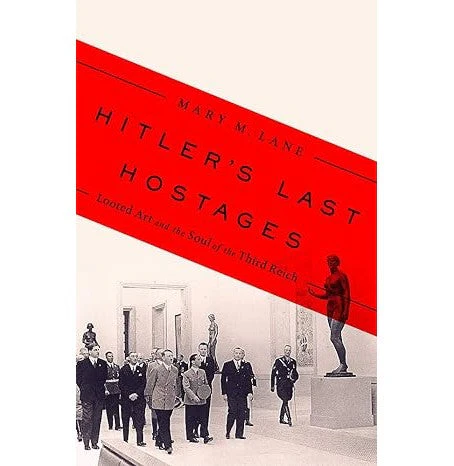
Hitler's Last Hostages is a sweeping examination of how art intersected with politics in 1920s–1930s Germany. Mary Lane reveals how Adolf Hitler, an artist at heart, sought to purge “degenerate” influences and redefine culture under a regime of censorship. This hardback edition speaks to readers who love art history, cultural history, and gripping stories about resilience—whether you’re a student, a history enthusiast, or simply curious about how creativity survives in dark times.
Written in a warm, narrative voice, the book threads individual artist portraits with the broader historical drama. It explains how art was weaponized by a political system, how galleries and museums endured ruthless culls, and how thousands of masterpieces went missing, many of which resurfaced decades later. The journey follows artists fleeing in peril, museums undergoing ruthless culls, and the 1,290 works from renowned artists like Chagall, Picasso, and Matisse vanishing in this oppressive era. Mary Lane crafts a vivid, human-centered history that makes the scale of loss tangible while highlighting the resilience of creators who refused to surrender their vision.
- A clear look at art and censorship in 1920s–1930s Germany
- The fate of 1,290 works by masters such as Chagall, Picasso, and Matisse
- The disappearance and later rediscovery of many masterpieces, including pieces resurfacing in 2014
- Biographical sketches and historical context that illuminate the era
- A compelling narrative of resilience, defiance, and the enduring power of creativity
Hitler's Last Hostages leaves you with a deeper understanding of how art survives oppression and the courage it takes to preserve culture under censorship. Readers emerge with a sense of hope and a renewed appreciation for the resilience of artists and the lasting impact of creativity.
Product Information
Product Information
Shipping & Returns
Shipping & Returns
Hitler'S Last Hostages
Hitler'S Last Hostages
Hitler's Last Hostages is a sweeping examination of how art intersected with politics in 1920s–1930s Germany. Mary Lane reveals how Adolf Hitler, an artist at heart, sought to purge “degenerate” influences and redefine culture under a regime of censorship. This hardback edition speaks to readers who love art history, cultural history, and gripping stories about resilience—whether you’re a student, a history enthusiast, or simply curious about how creativity survives in dark times.
Written in a warm, narrative voice, the book threads individual artist portraits with the broader historical drama. It explains how art was weaponized by a political system, how galleries and museums endured ruthless culls, and how thousands of masterpieces went missing, many of which resurfaced decades later. The journey follows artists fleeing in peril, museums undergoing ruthless culls, and the 1,290 works from renowned artists like Chagall, Picasso, and Matisse vanishing in this oppressive era. Mary Lane crafts a vivid, human-centered history that makes the scale of loss tangible while highlighting the resilience of creators who refused to surrender their vision.
- A clear look at art and censorship in 1920s–1930s Germany
- The fate of 1,290 works by masters such as Chagall, Picasso, and Matisse
- The disappearance and later rediscovery of many masterpieces, including pieces resurfacing in 2014
- Biographical sketches and historical context that illuminate the era
- A compelling narrative of resilience, defiance, and the enduring power of creativity
Hitler's Last Hostages leaves you with a deeper understanding of how art survives oppression and the courage it takes to preserve culture under censorship. Readers emerge with a sense of hope and a renewed appreciation for the resilience of artists and the lasting impact of creativity.
Original: $11.86
-70%$11.86
$3.56Product Information
Product Information
Shipping & Returns
Shipping & Returns
Description
Hitler's Last Hostages is a sweeping examination of how art intersected with politics in 1920s–1930s Germany. Mary Lane reveals how Adolf Hitler, an artist at heart, sought to purge “degenerate” influences and redefine culture under a regime of censorship. This hardback edition speaks to readers who love art history, cultural history, and gripping stories about resilience—whether you’re a student, a history enthusiast, or simply curious about how creativity survives in dark times.
Written in a warm, narrative voice, the book threads individual artist portraits with the broader historical drama. It explains how art was weaponized by a political system, how galleries and museums endured ruthless culls, and how thousands of masterpieces went missing, many of which resurfaced decades later. The journey follows artists fleeing in peril, museums undergoing ruthless culls, and the 1,290 works from renowned artists like Chagall, Picasso, and Matisse vanishing in this oppressive era. Mary Lane crafts a vivid, human-centered history that makes the scale of loss tangible while highlighting the resilience of creators who refused to surrender their vision.
- A clear look at art and censorship in 1920s–1930s Germany
- The fate of 1,290 works by masters such as Chagall, Picasso, and Matisse
- The disappearance and later rediscovery of many masterpieces, including pieces resurfacing in 2014
- Biographical sketches and historical context that illuminate the era
- A compelling narrative of resilience, defiance, and the enduring power of creativity
Hitler's Last Hostages leaves you with a deeper understanding of how art survives oppression and the courage it takes to preserve culture under censorship. Readers emerge with a sense of hope and a renewed appreciation for the resilience of artists and the lasting impact of creativity.