How Do Bridges Work?
How Do Bridges Work? explains the science and stories behind the structures we trust every day. This engaging, educational journey through architecture and engineering invites curious readers—especially young STEM fans and students—to explore why bridges exist, what the first bridges looked like, and how they stay up. With a warm, adventurous tone and vivid illustrations, this hardback edition invites you to see bridges as human-made inventions shaped by imagination, experimentation, and problem-solving.
The book is written and illustrated by Roman Belyaev, a Kate Greenaway Medal nominee and STEAM Children’s Book prize winner, bringing expert clarity and playful visuals to every page. How Do Bridges Work? is organized around accessible explanations, clear diagrams, and short, story-like explorations that follow school children as they discover different bridge types and the forces at work. The result is a paced reading experience that feels like a guided design challenge—informative yet fun, with engaging captions and colorful illustrations that help concepts click.
In How Do Bridges Work?, readers uncover key concepts from arches and beams to suspension and cable-stayed designs, and learn how loads, materials, and safety considerations shape every choice engineers make. The book makes learning engaging by pairing friendly explanations with vivid diagrams, real-world examples, and a clear progression that builds confidence as ideas stack up.
- Key content elements: bridge types (arch, beam, truss, suspension, cable-stayed), forces, materials
- Interactive or standout features: clear diagrams and vivid illustrations that invite readers to explore how bridges stay up
- Learning outcomes or experiences: builds understanding of physics and design, with real-world context
- Writing or illustration style: warm, accessible narration and detailed artwork by Roman Belyaev
After finishing How Do Bridges Work?, readers come away with a new appreciation for engineering, a clearer sense of how design solves real problems, and the confidence to explore STEM ideas on their own. The book leaves them thinking creatively about the world around them and inspired to learn more.
Product Information
Product Information
Shipping & Returns
Shipping & Returns
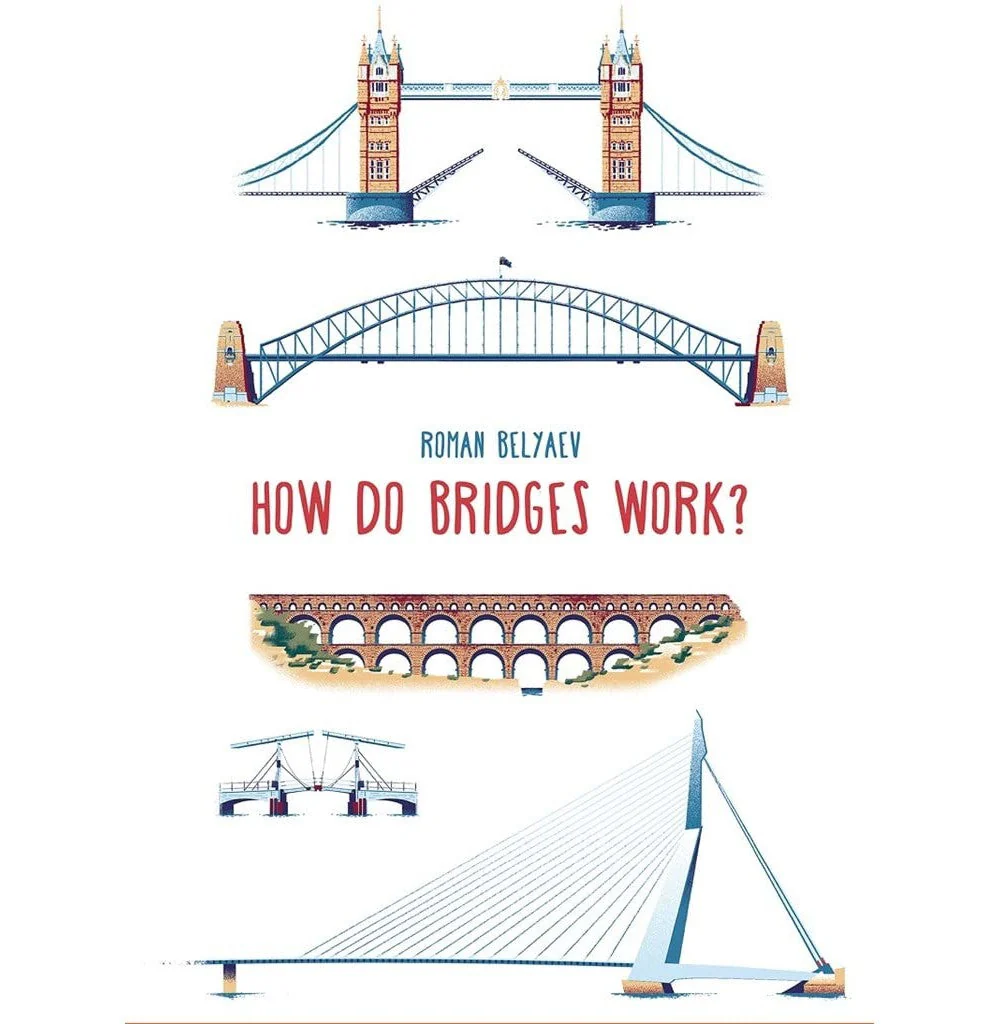
How Do Bridges Work?
How Do Bridges Work?
How Do Bridges Work? explains the science and stories behind the structures we trust every day. This engaging, educational journey through architecture and engineering invites curious readers—especially young STEM fans and students—to explore why bridges exist, what the first bridges looked like, and how they stay up. With a warm, adventurous tone and vivid illustrations, this hardback edition invites you to see bridges as human-made inventions shaped by imagination, experimentation, and problem-solving.
The book is written and illustrated by Roman Belyaev, a Kate Greenaway Medal nominee and STEAM Children’s Book prize winner, bringing expert clarity and playful visuals to every page. How Do Bridges Work? is organized around accessible explanations, clear diagrams, and short, story-like explorations that follow school children as they discover different bridge types and the forces at work. The result is a paced reading experience that feels like a guided design challenge—informative yet fun, with engaging captions and colorful illustrations that help concepts click.
In How Do Bridges Work?, readers uncover key concepts from arches and beams to suspension and cable-stayed designs, and learn how loads, materials, and safety considerations shape every choice engineers make. The book makes learning engaging by pairing friendly explanations with vivid diagrams, real-world examples, and a clear progression that builds confidence as ideas stack up.
- Key content elements: bridge types (arch, beam, truss, suspension, cable-stayed), forces, materials
- Interactive or standout features: clear diagrams and vivid illustrations that invite readers to explore how bridges stay up
- Learning outcomes or experiences: builds understanding of physics and design, with real-world context
- Writing or illustration style: warm, accessible narration and detailed artwork by Roman Belyaev
After finishing How Do Bridges Work?, readers come away with a new appreciation for engineering, a clearer sense of how design solves real problems, and the confidence to explore STEM ideas on their own. The book leaves them thinking creatively about the world around them and inspired to learn more.
Product Information
Product Information
Shipping & Returns
Shipping & Returns
Description
How Do Bridges Work? explains the science and stories behind the structures we trust every day. This engaging, educational journey through architecture and engineering invites curious readers—especially young STEM fans and students—to explore why bridges exist, what the first bridges looked like, and how they stay up. With a warm, adventurous tone and vivid illustrations, this hardback edition invites you to see bridges as human-made inventions shaped by imagination, experimentation, and problem-solving.
The book is written and illustrated by Roman Belyaev, a Kate Greenaway Medal nominee and STEAM Children’s Book prize winner, bringing expert clarity and playful visuals to every page. How Do Bridges Work? is organized around accessible explanations, clear diagrams, and short, story-like explorations that follow school children as they discover different bridge types and the forces at work. The result is a paced reading experience that feels like a guided design challenge—informative yet fun, with engaging captions and colorful illustrations that help concepts click.
In How Do Bridges Work?, readers uncover key concepts from arches and beams to suspension and cable-stayed designs, and learn how loads, materials, and safety considerations shape every choice engineers make. The book makes learning engaging by pairing friendly explanations with vivid diagrams, real-world examples, and a clear progression that builds confidence as ideas stack up.
- Key content elements: bridge types (arch, beam, truss, suspension, cable-stayed), forces, materials
- Interactive or standout features: clear diagrams and vivid illustrations that invite readers to explore how bridges stay up
- Learning outcomes or experiences: builds understanding of physics and design, with real-world context
- Writing or illustration style: warm, accessible narration and detailed artwork by Roman Belyaev
After finishing How Do Bridges Work?, readers come away with a new appreciation for engineering, a clearer sense of how design solves real problems, and the confidence to explore STEM ideas on their own. The book leaves them thinking creatively about the world around them and inspired to learn more.