India'S Founding Moment
India's Founding Moment tells the story of how India's Constitution came into being and how democracy was established after independence. This thoughtful non-fiction work sits at the crossroads of history and political theory, making it a compelling read for students, scholars, and curious readers of Indian politics and law. The tone is educational and hopeful, inviting you to understand why the promise of self-rule mattered then and why it still matters today.
Madhav Khosla guides readers through the drafting process and the debates that shaped the Constitution, showing how the founders confronted poverty, illiteracy, social diversity, and centuries of tradition. They chose a path toward a self-sustaining politics, rather than rule by a privileged elite, and built a framework designed to endure under challenging conditions. The book centers on universal suffrage and the move to a democratic citizenry enacted as part of a practical project in 1950, a cornerstone of the narrative.
Written in a warm, accessible voice, India's Founding Moment blends historical texture with careful analysis. It brings together context, constitutional theory, and lived outcomes to reveal how the Constitution's design aimed to empower ordinary people. Whether you’re a student seeking clarity on how democracies take root or a general reader curious about India’s political journey, the book presents key ideas—constitutional design, citizenship, and democratization—in a way that’s engaging and memorable.
- In-depth examination of how India's founders fostered democratic citizenship amid poverty, illiteracy, and diversity
- Analysis of universal suffrage and the creation of a lasting constitutional framework
- Contextual look at colonial rule and the move to independence
- Clear, accessible prose by Madhav Khosla that guides readers through complex ideas
- Thoughtful reflections on how India’s Founding Moment offers a reference point for other nations
- Structured approach that links history, politics, and constitutionalism
After finishing India’s Founding Moment, readers gain a nuanced view of how inclusive institutions can sustain democracy in diverse societies, and they’ll feel more confident about thinking critically about constitutionalism and civic participation.
Product Information
Product Information
Shipping & Returns
Shipping & Returns
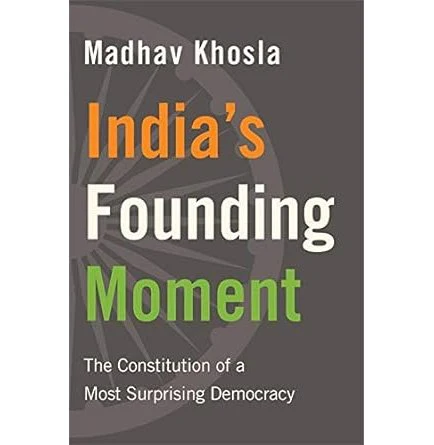
India'S Founding Moment
India'S Founding Moment
India's Founding Moment tells the story of how India's Constitution came into being and how democracy was established after independence. This thoughtful non-fiction work sits at the crossroads of history and political theory, making it a compelling read for students, scholars, and curious readers of Indian politics and law. The tone is educational and hopeful, inviting you to understand why the promise of self-rule mattered then and why it still matters today.
Madhav Khosla guides readers through the drafting process and the debates that shaped the Constitution, showing how the founders confronted poverty, illiteracy, social diversity, and centuries of tradition. They chose a path toward a self-sustaining politics, rather than rule by a privileged elite, and built a framework designed to endure under challenging conditions. The book centers on universal suffrage and the move to a democratic citizenry enacted as part of a practical project in 1950, a cornerstone of the narrative.
Written in a warm, accessible voice, India's Founding Moment blends historical texture with careful analysis. It brings together context, constitutional theory, and lived outcomes to reveal how the Constitution's design aimed to empower ordinary people. Whether you’re a student seeking clarity on how democracies take root or a general reader curious about India’s political journey, the book presents key ideas—constitutional design, citizenship, and democratization—in a way that’s engaging and memorable.
- In-depth examination of how India's founders fostered democratic citizenship amid poverty, illiteracy, and diversity
- Analysis of universal suffrage and the creation of a lasting constitutional framework
- Contextual look at colonial rule and the move to independence
- Clear, accessible prose by Madhav Khosla that guides readers through complex ideas
- Thoughtful reflections on how India’s Founding Moment offers a reference point for other nations
- Structured approach that links history, politics, and constitutionalism
After finishing India’s Founding Moment, readers gain a nuanced view of how inclusive institutions can sustain democracy in diverse societies, and they’ll feel more confident about thinking critically about constitutionalism and civic participation.
Original: $5.47
-70%$5.47
$1.64Product Information
Product Information
Shipping & Returns
Shipping & Returns
Description
India's Founding Moment tells the story of how India's Constitution came into being and how democracy was established after independence. This thoughtful non-fiction work sits at the crossroads of history and political theory, making it a compelling read for students, scholars, and curious readers of Indian politics and law. The tone is educational and hopeful, inviting you to understand why the promise of self-rule mattered then and why it still matters today.
Madhav Khosla guides readers through the drafting process and the debates that shaped the Constitution, showing how the founders confronted poverty, illiteracy, social diversity, and centuries of tradition. They chose a path toward a self-sustaining politics, rather than rule by a privileged elite, and built a framework designed to endure under challenging conditions. The book centers on universal suffrage and the move to a democratic citizenry enacted as part of a practical project in 1950, a cornerstone of the narrative.
Written in a warm, accessible voice, India's Founding Moment blends historical texture with careful analysis. It brings together context, constitutional theory, and lived outcomes to reveal how the Constitution's design aimed to empower ordinary people. Whether you’re a student seeking clarity on how democracies take root or a general reader curious about India’s political journey, the book presents key ideas—constitutional design, citizenship, and democratization—in a way that’s engaging and memorable.
- In-depth examination of how India's founders fostered democratic citizenship amid poverty, illiteracy, and diversity
- Analysis of universal suffrage and the creation of a lasting constitutional framework
- Contextual look at colonial rule and the move to independence
- Clear, accessible prose by Madhav Khosla that guides readers through complex ideas
- Thoughtful reflections on how India’s Founding Moment offers a reference point for other nations
- Structured approach that links history, politics, and constitutionalism
After finishing India’s Founding Moment, readers gain a nuanced view of how inclusive institutions can sustain democracy in diverse societies, and they’ll feel more confident about thinking critically about constitutionalism and civic participation.