India'S Undeclared Emergency: Constitutionalism And The Politics Of Resistance
Indias Undeclared Emergency: Constitutionalism And The Politics Of Resistance is a sharp, accessible analysis of India's ongoing constitutional crisis. This non-fiction work examines what an undeclared emergency means for the Constitution, the rule of law, and democracy, tracing echoes from the 1975 period to today. Written for adult readers, students of law and politics, and engaged citizens, the tone is urgent, thought-provoking, and hopeful about democratic resilience.
Arvind Narrain writes with a clear, grounded structure that guides you from historical context to contemporary implications. The book blends rigorous legal analysis with accessible storytelling, presenting chapters that weave case references, essential concepts, and real-world implications into a cohesive narrative. It explains how censorship, preventive detention, centralization of power, and executive accountability affect daily life and the health of democracy, while highlighting moments of resistance that have shaped Indian constitutionalism. Whether you’re new to constitutional theory or a seasoned reader, Indias Undeclared Emergency invites you to think critically about power, rights, and the duties of citizens in a democracy.
Structured to be both informative and inspiring, the book uses a narrative that ties legal concepts to lived experiences. It presents key ideas—rule of law, checks and balances, and accountability—in a way that is approachable without sacrificing rigor. By tracing a lineage of constitutional subversion from past to present, Indias Undeclared Emergency offers not just a critique, but a framework for understanding how resistance can emerge from lawful, principled action.
- Key content elements: In-depth analysis of the 1975 Emergency and the idea of an undeclared emergency in today’s India, constitutionalism, human rights, censorship, and executive accountability.
- Standout features: A clear, accessible legal narrative that ties historical events to current political debates, with careful citations and real-world relevance.
- Learning outcomes: A sharper understanding of how the Constitution protects rights and what happens when these guardrails are tested, plus tools to engage in civic dialogue.
- Writing and style: Clear-eyed, rigorous, and readable prose that makes complex legal concepts approachable for a broad audience.
After finishing Indias Undeclared Emergency, readers gain a grounded understanding of how democracy can be buffeted by power yet endure through vigilance and resistance. The book leaves you thinking differently about power, rights, and the responsibility of citizens, and it offers a lasting perspective on how constitutionalism can guide action in difficult times.
Product Information
Product Information
Shipping & Returns
Shipping & Returns
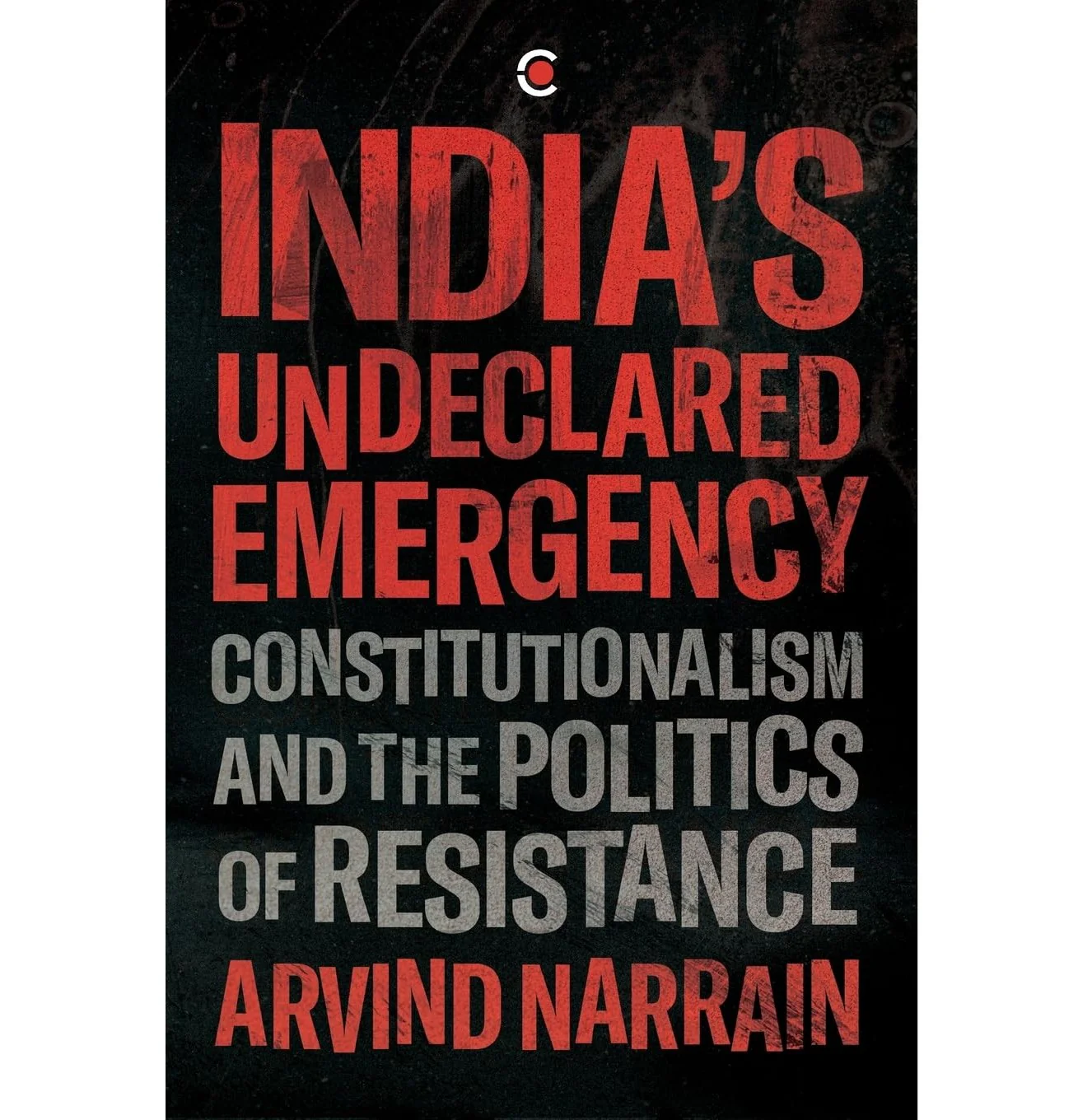
India'S Undeclared Emergency: Constitutionalism And The Politics Of Resistance
India'S Undeclared Emergency: Constitutionalism And The Politics Of Resistance
Indias Undeclared Emergency: Constitutionalism And The Politics Of Resistance is a sharp, accessible analysis of India's ongoing constitutional crisis. This non-fiction work examines what an undeclared emergency means for the Constitution, the rule of law, and democracy, tracing echoes from the 1975 period to today. Written for adult readers, students of law and politics, and engaged citizens, the tone is urgent, thought-provoking, and hopeful about democratic resilience.
Arvind Narrain writes with a clear, grounded structure that guides you from historical context to contemporary implications. The book blends rigorous legal analysis with accessible storytelling, presenting chapters that weave case references, essential concepts, and real-world implications into a cohesive narrative. It explains how censorship, preventive detention, centralization of power, and executive accountability affect daily life and the health of democracy, while highlighting moments of resistance that have shaped Indian constitutionalism. Whether you’re new to constitutional theory or a seasoned reader, Indias Undeclared Emergency invites you to think critically about power, rights, and the duties of citizens in a democracy.
Structured to be both informative and inspiring, the book uses a narrative that ties legal concepts to lived experiences. It presents key ideas—rule of law, checks and balances, and accountability—in a way that is approachable without sacrificing rigor. By tracing a lineage of constitutional subversion from past to present, Indias Undeclared Emergency offers not just a critique, but a framework for understanding how resistance can emerge from lawful, principled action.
- Key content elements: In-depth analysis of the 1975 Emergency and the idea of an undeclared emergency in today’s India, constitutionalism, human rights, censorship, and executive accountability.
- Standout features: A clear, accessible legal narrative that ties historical events to current political debates, with careful citations and real-world relevance.
- Learning outcomes: A sharper understanding of how the Constitution protects rights and what happens when these guardrails are tested, plus tools to engage in civic dialogue.
- Writing and style: Clear-eyed, rigorous, and readable prose that makes complex legal concepts approachable for a broad audience.
After finishing Indias Undeclared Emergency, readers gain a grounded understanding of how democracy can be buffeted by power yet endure through vigilance and resistance. The book leaves you thinking differently about power, rights, and the responsibility of citizens, and it offers a lasting perspective on how constitutionalism can guide action in difficult times.
Product Information
Product Information
Shipping & Returns
Shipping & Returns
Description
Indias Undeclared Emergency: Constitutionalism And The Politics Of Resistance is a sharp, accessible analysis of India's ongoing constitutional crisis. This non-fiction work examines what an undeclared emergency means for the Constitution, the rule of law, and democracy, tracing echoes from the 1975 period to today. Written for adult readers, students of law and politics, and engaged citizens, the tone is urgent, thought-provoking, and hopeful about democratic resilience.
Arvind Narrain writes with a clear, grounded structure that guides you from historical context to contemporary implications. The book blends rigorous legal analysis with accessible storytelling, presenting chapters that weave case references, essential concepts, and real-world implications into a cohesive narrative. It explains how censorship, preventive detention, centralization of power, and executive accountability affect daily life and the health of democracy, while highlighting moments of resistance that have shaped Indian constitutionalism. Whether you’re new to constitutional theory or a seasoned reader, Indias Undeclared Emergency invites you to think critically about power, rights, and the duties of citizens in a democracy.
Structured to be both informative and inspiring, the book uses a narrative that ties legal concepts to lived experiences. It presents key ideas—rule of law, checks and balances, and accountability—in a way that is approachable without sacrificing rigor. By tracing a lineage of constitutional subversion from past to present, Indias Undeclared Emergency offers not just a critique, but a framework for understanding how resistance can emerge from lawful, principled action.
- Key content elements: In-depth analysis of the 1975 Emergency and the idea of an undeclared emergency in today’s India, constitutionalism, human rights, censorship, and executive accountability.
- Standout features: A clear, accessible legal narrative that ties historical events to current political debates, with careful citations and real-world relevance.
- Learning outcomes: A sharper understanding of how the Constitution protects rights and what happens when these guardrails are tested, plus tools to engage in civic dialogue.
- Writing and style: Clear-eyed, rigorous, and readable prose that makes complex legal concepts approachable for a broad audience.
After finishing Indias Undeclared Emergency, readers gain a grounded understanding of how democracy can be buffeted by power yet endure through vigilance and resistance. The book leaves you thinking differently about power, rights, and the responsibility of citizens, and it offers a lasting perspective on how constitutionalism can guide action in difficult times.