Mumbai
Mumbai: A Million Islands unfolds the story of a city in flux, tracing how seven historic islands fused into today’s metropolis while exposing how rapid development often erases communities. Part urban history, part social reportage, this book speaks to readers who care about cities, culture, and social justice—anyone who wants to understand who benefits from growth and who pays the price. The tone is urgent yet hopeful, inviting you to see Mumbai not just as a skyline but as a living, pulsing social fabric.
In grounded, empathetic prose, Sidharth Bhatia blends historical milestones with on-the-ground accounts, tracing the arc from the East India Company's unification of the seven islands to today’s rapid, gated development. The book centers the stories of the working class displaced by new towers, the absence of infrastructure in distant housing projects, and the erosion of memory and community—offering a human-scale portrait of a city in transition.
Written for curious readers of urban studies and contemporary history, Mumbai: A Million Islands weaves archival context with interviews and reportage to illuminate how displacement, housing policy, and cultural memory shape a metropolis. The narrative maintains a steady pace, presenting key concepts in clear, accessible language and inviting readers to consider what growth costs—and what it truly means to belong in a city that never stops evolving.
- Historical arc of Mumbai from seven islands to a modern metropolis
- Stories of communities displaced by rapid development and gated spaces
- On-the-ground reporting, interviews, and archival context
- Exploration of memory, identity, and urban resilience
- Clear, humane writing that makes complex urban issues accessible
After finishing Mumbai: A Million Islands, readers gain a deeper understanding of what urban transformation means for people, memory, and belonging. The book leaves you with empathy for those shaping and being shaped by the city, and a lasting sense that thoughtful, inclusive growth is possible when communities are seen and heard.
Product Information
Product Information
Shipping & Returns
Shipping & Returns
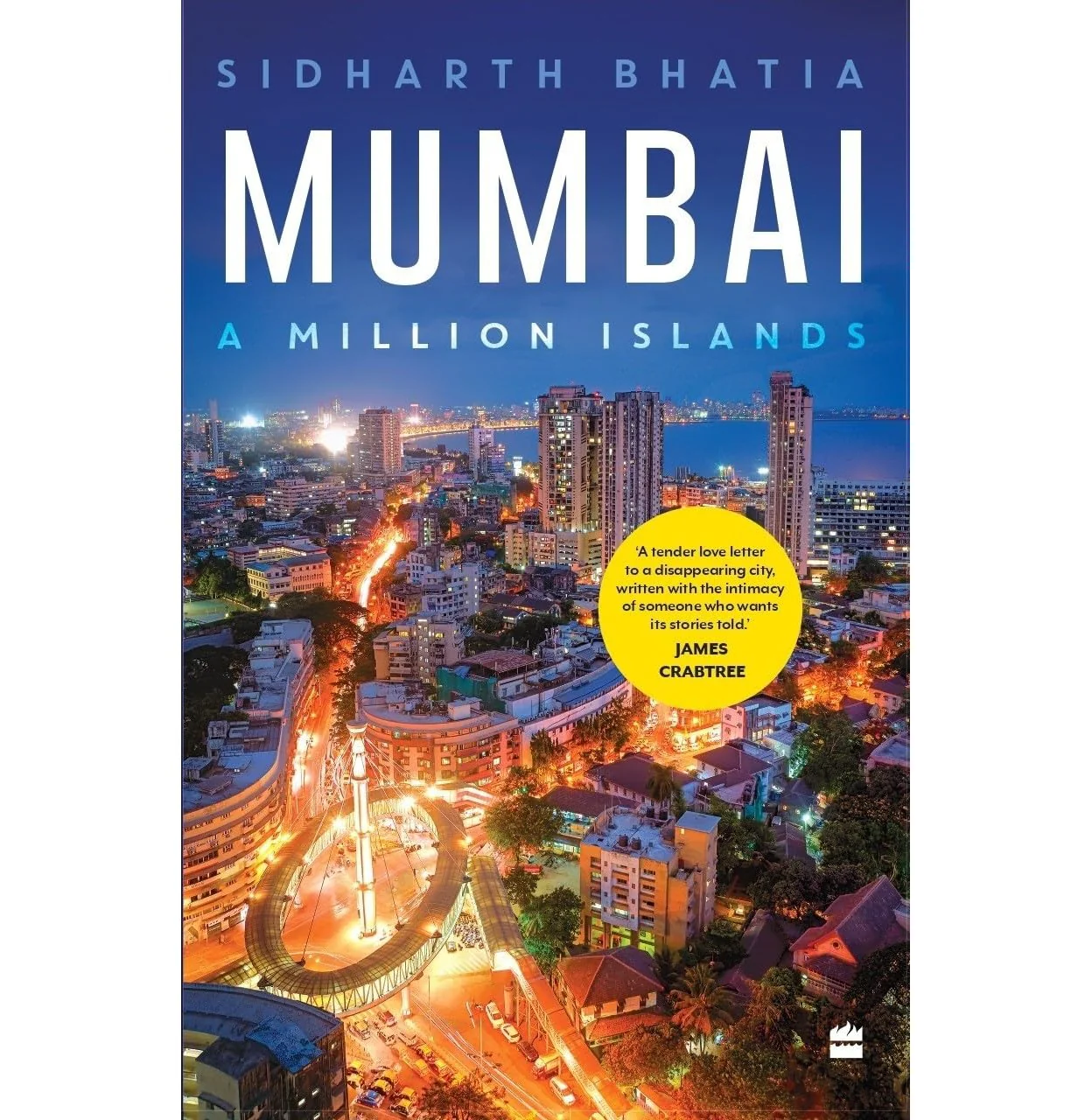
Mumbai
Mumbai
Mumbai: A Million Islands unfolds the story of a city in flux, tracing how seven historic islands fused into today’s metropolis while exposing how rapid development often erases communities. Part urban history, part social reportage, this book speaks to readers who care about cities, culture, and social justice—anyone who wants to understand who benefits from growth and who pays the price. The tone is urgent yet hopeful, inviting you to see Mumbai not just as a skyline but as a living, pulsing social fabric.
In grounded, empathetic prose, Sidharth Bhatia blends historical milestones with on-the-ground accounts, tracing the arc from the East India Company's unification of the seven islands to today’s rapid, gated development. The book centers the stories of the working class displaced by new towers, the absence of infrastructure in distant housing projects, and the erosion of memory and community—offering a human-scale portrait of a city in transition.
Written for curious readers of urban studies and contemporary history, Mumbai: A Million Islands weaves archival context with interviews and reportage to illuminate how displacement, housing policy, and cultural memory shape a metropolis. The narrative maintains a steady pace, presenting key concepts in clear, accessible language and inviting readers to consider what growth costs—and what it truly means to belong in a city that never stops evolving.
- Historical arc of Mumbai from seven islands to a modern metropolis
- Stories of communities displaced by rapid development and gated spaces
- On-the-ground reporting, interviews, and archival context
- Exploration of memory, identity, and urban resilience
- Clear, humane writing that makes complex urban issues accessible
After finishing Mumbai: A Million Islands, readers gain a deeper understanding of what urban transformation means for people, memory, and belonging. The book leaves you with empathy for those shaping and being shaped by the city, and a lasting sense that thoughtful, inclusive growth is possible when communities are seen and heard.
Product Information
Product Information
Shipping & Returns
Shipping & Returns
Description
Mumbai: A Million Islands unfolds the story of a city in flux, tracing how seven historic islands fused into today’s metropolis while exposing how rapid development often erases communities. Part urban history, part social reportage, this book speaks to readers who care about cities, culture, and social justice—anyone who wants to understand who benefits from growth and who pays the price. The tone is urgent yet hopeful, inviting you to see Mumbai not just as a skyline but as a living, pulsing social fabric.
In grounded, empathetic prose, Sidharth Bhatia blends historical milestones with on-the-ground accounts, tracing the arc from the East India Company's unification of the seven islands to today’s rapid, gated development. The book centers the stories of the working class displaced by new towers, the absence of infrastructure in distant housing projects, and the erosion of memory and community—offering a human-scale portrait of a city in transition.
Written for curious readers of urban studies and contemporary history, Mumbai: A Million Islands weaves archival context with interviews and reportage to illuminate how displacement, housing policy, and cultural memory shape a metropolis. The narrative maintains a steady pace, presenting key concepts in clear, accessible language and inviting readers to consider what growth costs—and what it truly means to belong in a city that never stops evolving.
- Historical arc of Mumbai from seven islands to a modern metropolis
- Stories of communities displaced by rapid development and gated spaces
- On-the-ground reporting, interviews, and archival context
- Exploration of memory, identity, and urban resilience
- Clear, humane writing that makes complex urban issues accessible
After finishing Mumbai: A Million Islands, readers gain a deeper understanding of what urban transformation means for people, memory, and belonging. The book leaves you with empathy for those shaping and being shaped by the city, and a lasting sense that thoughtful, inclusive growth is possible when communities are seen and heard.