Nine Rupees An Hour: Disappearing Livelihoods Of Tamil Nadu
Nine Rupees An Hour: Disappearing Livelihoods of Tamil Nadu invites you into the lives of people who sustain their families against a backdrop of rapid urbanization. This non-fiction work from Aparna Karthikeyan examines livelihoods in rural Tamil Nadu, blending intimate portraits with sharp social analysis. It speaks to curious readers of social issues, development studies, and anyone who wants a clearer, more humane picture of the costs—and the dignity—embedded in everyday work. The tone is compassionate, insightful, and quietly hopeful.
Over five years of fieldwork, Nine Rupees An Hour travels across villages to collect ten compelling narratives that reveal how ordinary labor sustains families while change redefines the meaning of work. The book also includes insightful interviews with figures such as journalist P. Sainath, musician T. M. Krishna, and writer Bama, weaving their perspectives into the conversation about wages, culture, and development. It stays close to real lives, letting readers feel the human stakes behind statistics.
Written in a warm, narrative voice, the book balances storytelling with rigorous context, presenting key concepts about wages, food security, and inclusive growth in a way that is accessible and engaging. Nine Rupees An Hour pairs vivid scenes with data, inviting readers to think critically about how market forces shape opportunity and how communities adapt with resilience and creativity.
- Ten in-depth narratives from Tamil Nadu villages
- Five years of fieldwork combining stories with wage data
- Interviews and perspectives from P. Sainath, T. M. Krishna, and Bama
- Juxtaposition of personal testimony with statistics on wages and work
- Clear, compassionate writing that honors the dignity of everyday labor
- Themes of culture, food security, and inclusive development woven throughout
After finishing Nine Rupees An Hour, readers gain a nuanced understanding of livelihoods beyond numbers and walk away with empathy, a deeper awareness of development's human costs, and renewed hope in the resilience of communities that sustain society.
Product Information
Product Information
Shipping & Returns
Shipping & Returns
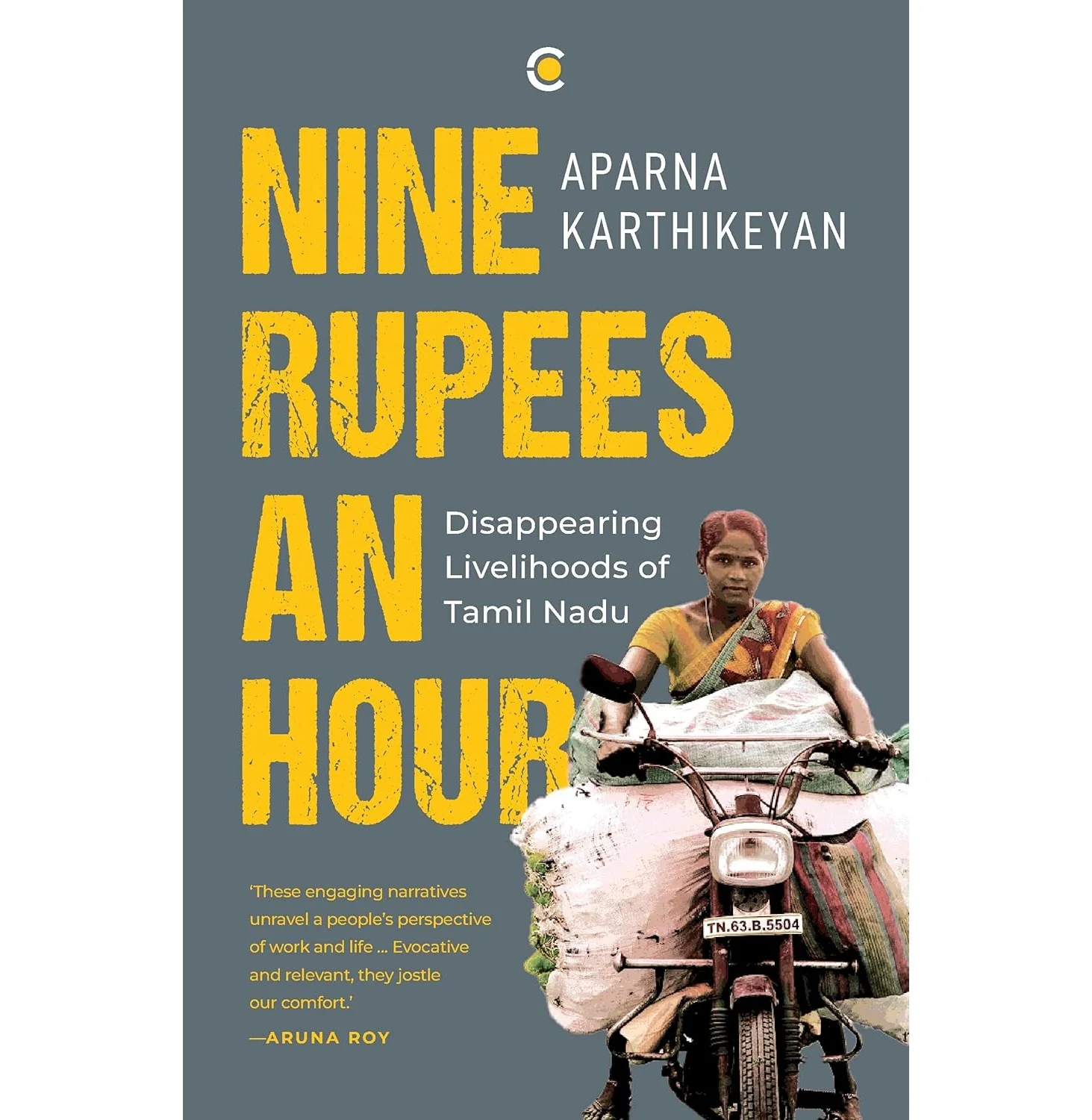
Nine Rupees An Hour: Disappearing Livelihoods Of Tamil Nadu
Nine Rupees An Hour: Disappearing Livelihoods Of Tamil Nadu
Nine Rupees An Hour: Disappearing Livelihoods of Tamil Nadu invites you into the lives of people who sustain their families against a backdrop of rapid urbanization. This non-fiction work from Aparna Karthikeyan examines livelihoods in rural Tamil Nadu, blending intimate portraits with sharp social analysis. It speaks to curious readers of social issues, development studies, and anyone who wants a clearer, more humane picture of the costs—and the dignity—embedded in everyday work. The tone is compassionate, insightful, and quietly hopeful.
Over five years of fieldwork, Nine Rupees An Hour travels across villages to collect ten compelling narratives that reveal how ordinary labor sustains families while change redefines the meaning of work. The book also includes insightful interviews with figures such as journalist P. Sainath, musician T. M. Krishna, and writer Bama, weaving their perspectives into the conversation about wages, culture, and development. It stays close to real lives, letting readers feel the human stakes behind statistics.
Written in a warm, narrative voice, the book balances storytelling with rigorous context, presenting key concepts about wages, food security, and inclusive growth in a way that is accessible and engaging. Nine Rupees An Hour pairs vivid scenes with data, inviting readers to think critically about how market forces shape opportunity and how communities adapt with resilience and creativity.
- Ten in-depth narratives from Tamil Nadu villages
- Five years of fieldwork combining stories with wage data
- Interviews and perspectives from P. Sainath, T. M. Krishna, and Bama
- Juxtaposition of personal testimony with statistics on wages and work
- Clear, compassionate writing that honors the dignity of everyday labor
- Themes of culture, food security, and inclusive development woven throughout
After finishing Nine Rupees An Hour, readers gain a nuanced understanding of livelihoods beyond numbers and walk away with empathy, a deeper awareness of development's human costs, and renewed hope in the resilience of communities that sustain society.
Original: $4.56
-70%$4.56
$1.37Product Information
Product Information
Shipping & Returns
Shipping & Returns
Description
Nine Rupees An Hour: Disappearing Livelihoods of Tamil Nadu invites you into the lives of people who sustain their families against a backdrop of rapid urbanization. This non-fiction work from Aparna Karthikeyan examines livelihoods in rural Tamil Nadu, blending intimate portraits with sharp social analysis. It speaks to curious readers of social issues, development studies, and anyone who wants a clearer, more humane picture of the costs—and the dignity—embedded in everyday work. The tone is compassionate, insightful, and quietly hopeful.
Over five years of fieldwork, Nine Rupees An Hour travels across villages to collect ten compelling narratives that reveal how ordinary labor sustains families while change redefines the meaning of work. The book also includes insightful interviews with figures such as journalist P. Sainath, musician T. M. Krishna, and writer Bama, weaving their perspectives into the conversation about wages, culture, and development. It stays close to real lives, letting readers feel the human stakes behind statistics.
Written in a warm, narrative voice, the book balances storytelling with rigorous context, presenting key concepts about wages, food security, and inclusive growth in a way that is accessible and engaging. Nine Rupees An Hour pairs vivid scenes with data, inviting readers to think critically about how market forces shape opportunity and how communities adapt with resilience and creativity.
- Ten in-depth narratives from Tamil Nadu villages
- Five years of fieldwork combining stories with wage data
- Interviews and perspectives from P. Sainath, T. M. Krishna, and Bama
- Juxtaposition of personal testimony with statistics on wages and work
- Clear, compassionate writing that honors the dignity of everyday labor
- Themes of culture, food security, and inclusive development woven throughout
After finishing Nine Rupees An Hour, readers gain a nuanced understanding of livelihoods beyond numbers and walk away with empathy, a deeper awareness of development's human costs, and renewed hope in the resilience of communities that sustain society.