Once Upon A Story
Once Upon A Story is a practical guide for teachers and educators that invites you to rethink early childhood learning through child‑centered pedagogy. Rooted in the thinking of Gijubhai and shaped by Swati’s Kiducation philosophy, this book explores how storytelling, imagination, and learning through play can transform classrooms. Ideal for teachers, teacher trainees, curriculum developers, and school leaders who want to nurture curiosity and confidence in young learners, the tone is encouraging, insightful, and empowering.
Written as a thoughtful blend of reflection and classroom-tested examples, the book unfolds through approachable chapters that echo the cadence of a story while offering concrete guidance. It invites educators to pause, reflect, and try simple activities the very next day—story circles, collaborative storytelling, dramatic play, and inquiry‑driven explorations that align with real learning goals. The pace is gentle but purposeful, honoring children's curiosity while providing practical tools. Through this lens, Once Upon A Story highlights key concepts like child rights, developmentally appropriate practice, storytelling as a powerful learning medium, and imagination as a driver of inquiry.
The text draws a clear line between theory and practice, presenting ideas in a warm, practitioner‑friendly voice. It weaves storytelling, interactive activities, illustrations, and reflective prompts into an accessible learning journey. If you’re exploring non‑traditional approaches, you’ll find the book’s structure conducive to classroom use: multi‑layered analyses on how we learn, paired with real examples, paced learning moments, and suggestions for adapting activities to diverse groups. The author also brings in Froebel‑inspired ideas for teaching foundational numeracy and coding skills, offering a concrete pathway to integrate play with core academic goals.
- Child‑centered pedagogy inspired by Gijubhai, focused on listening to and valuing each child’s voice
- Storytelling, imagination, and learning through play as core teaching methods
- Practical classroom strategies, real‑world examples, and reflective prompts
- Ideas for interactive activities, inclusive practices, and adaptable lesson concepts
- Froebel‑inspired approaches to teach foundational numeracy and coding through play
- Clear, compassionate writing that supports teachers across roles and settings
Readers will finish Once Upon A Story with a ready‑to‑apply toolkit, a deeper appreciation for children’s agency, and a renewed sense of purpose in teaching. The book leaves you feeling confident, inspired, and equipped to cultivate curious, capable learners who approach school with joy and resilience.
Product Information
Product Information
Shipping & Returns
Shipping & Returns
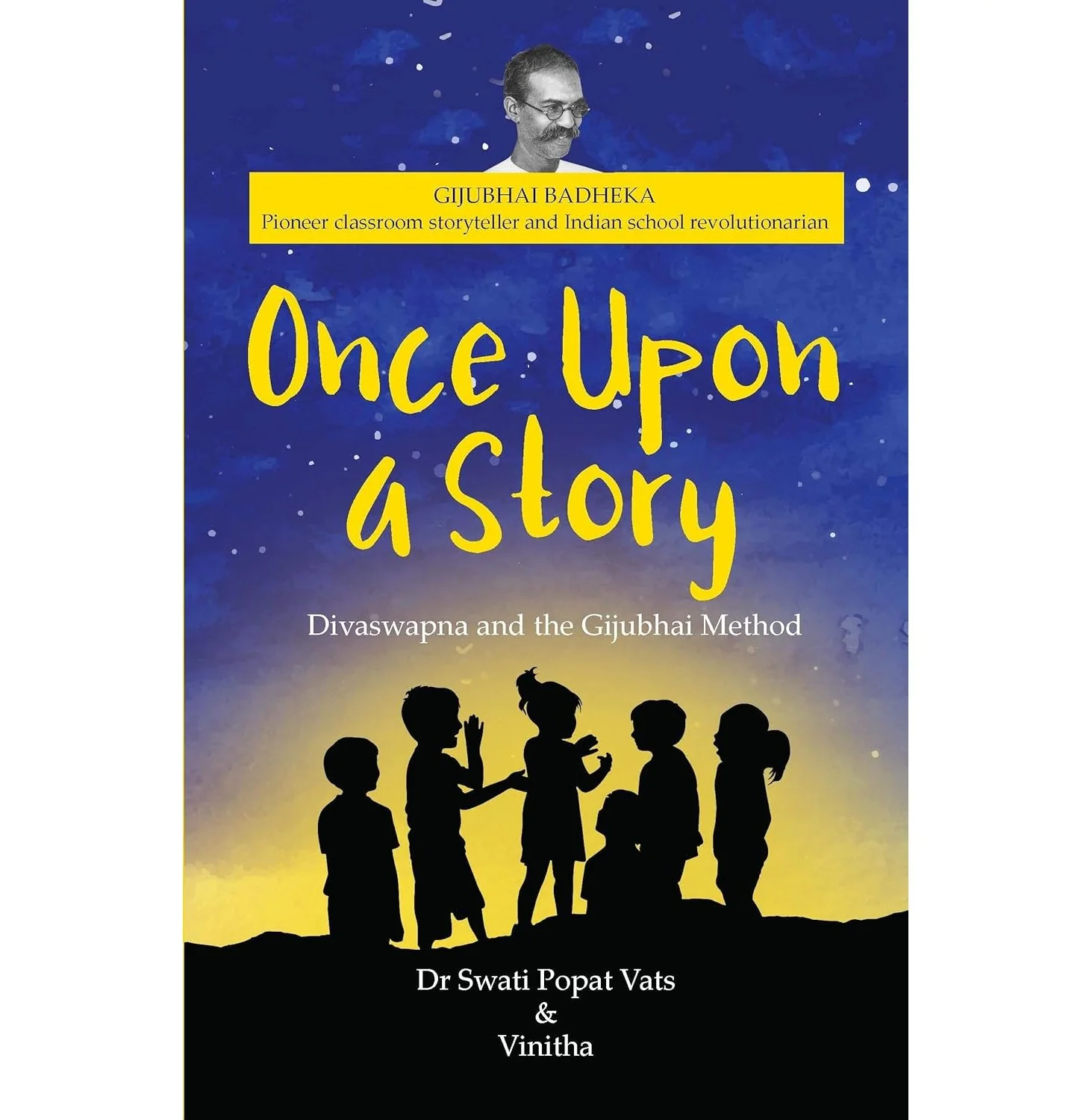
Once Upon A Story
Once Upon A Story
Once Upon A Story is a practical guide for teachers and educators that invites you to rethink early childhood learning through child‑centered pedagogy. Rooted in the thinking of Gijubhai and shaped by Swati’s Kiducation philosophy, this book explores how storytelling, imagination, and learning through play can transform classrooms. Ideal for teachers, teacher trainees, curriculum developers, and school leaders who want to nurture curiosity and confidence in young learners, the tone is encouraging, insightful, and empowering.
Written as a thoughtful blend of reflection and classroom-tested examples, the book unfolds through approachable chapters that echo the cadence of a story while offering concrete guidance. It invites educators to pause, reflect, and try simple activities the very next day—story circles, collaborative storytelling, dramatic play, and inquiry‑driven explorations that align with real learning goals. The pace is gentle but purposeful, honoring children's curiosity while providing practical tools. Through this lens, Once Upon A Story highlights key concepts like child rights, developmentally appropriate practice, storytelling as a powerful learning medium, and imagination as a driver of inquiry.
The text draws a clear line between theory and practice, presenting ideas in a warm, practitioner‑friendly voice. It weaves storytelling, interactive activities, illustrations, and reflective prompts into an accessible learning journey. If you’re exploring non‑traditional approaches, you’ll find the book’s structure conducive to classroom use: multi‑layered analyses on how we learn, paired with real examples, paced learning moments, and suggestions for adapting activities to diverse groups. The author also brings in Froebel‑inspired ideas for teaching foundational numeracy and coding skills, offering a concrete pathway to integrate play with core academic goals.
- Child‑centered pedagogy inspired by Gijubhai, focused on listening to and valuing each child’s voice
- Storytelling, imagination, and learning through play as core teaching methods
- Practical classroom strategies, real‑world examples, and reflective prompts
- Ideas for interactive activities, inclusive practices, and adaptable lesson concepts
- Froebel‑inspired approaches to teach foundational numeracy and coding through play
- Clear, compassionate writing that supports teachers across roles and settings
Readers will finish Once Upon A Story with a ready‑to‑apply toolkit, a deeper appreciation for children’s agency, and a renewed sense of purpose in teaching. The book leaves you feeling confident, inspired, and equipped to cultivate curious, capable learners who approach school with joy and resilience.
Original: $2.73
-70%$2.73
$0.82Product Information
Product Information
Shipping & Returns
Shipping & Returns
Description
Once Upon A Story is a practical guide for teachers and educators that invites you to rethink early childhood learning through child‑centered pedagogy. Rooted in the thinking of Gijubhai and shaped by Swati’s Kiducation philosophy, this book explores how storytelling, imagination, and learning through play can transform classrooms. Ideal for teachers, teacher trainees, curriculum developers, and school leaders who want to nurture curiosity and confidence in young learners, the tone is encouraging, insightful, and empowering.
Written as a thoughtful blend of reflection and classroom-tested examples, the book unfolds through approachable chapters that echo the cadence of a story while offering concrete guidance. It invites educators to pause, reflect, and try simple activities the very next day—story circles, collaborative storytelling, dramatic play, and inquiry‑driven explorations that align with real learning goals. The pace is gentle but purposeful, honoring children's curiosity while providing practical tools. Through this lens, Once Upon A Story highlights key concepts like child rights, developmentally appropriate practice, storytelling as a powerful learning medium, and imagination as a driver of inquiry.
The text draws a clear line between theory and practice, presenting ideas in a warm, practitioner‑friendly voice. It weaves storytelling, interactive activities, illustrations, and reflective prompts into an accessible learning journey. If you’re exploring non‑traditional approaches, you’ll find the book’s structure conducive to classroom use: multi‑layered analyses on how we learn, paired with real examples, paced learning moments, and suggestions for adapting activities to diverse groups. The author also brings in Froebel‑inspired ideas for teaching foundational numeracy and coding skills, offering a concrete pathway to integrate play with core academic goals.
- Child‑centered pedagogy inspired by Gijubhai, focused on listening to and valuing each child’s voice
- Storytelling, imagination, and learning through play as core teaching methods
- Practical classroom strategies, real‑world examples, and reflective prompts
- Ideas for interactive activities, inclusive practices, and adaptable lesson concepts
- Froebel‑inspired approaches to teach foundational numeracy and coding through play
- Clear, compassionate writing that supports teachers across roles and settings
Readers will finish Once Upon A Story with a ready‑to‑apply toolkit, a deeper appreciation for children’s agency, and a renewed sense of purpose in teaching. The book leaves you feeling confident, inspired, and equipped to cultivate curious, capable learners who approach school with joy and resilience.