Poor Economics
Poor Economics offers a clear, thoughtful look at why poverty persists and how people actually respond to money, risk, and opportunity. A landmark work in development economics, the book surveys daily choices and the policies designed to help. It is ideal for students, professionals, and curious readers who want a practical, evidence-based window into how aid can make a real difference—and it does so with a hopeful, accessible tone.
Esther Duflo and Abhijit Banerjee, in Poor Economics, draw on decades of field research with the Poverty Action Lab to confront big questions with small, real-world answers: why do families still prioritize certain purchases when money is tight? how do obstacles at home, school, or clinic shape outcomes? and what kinds of programs actually improve well-being and opportunity? Through measured experiments and vivid case studies, the book shows how thoughtful design and careful testing can reveal what works in practice.
The writing in Poor Economics is organized around questions and evidence, with accessible explanations, compelling stories, and occasional charts that illuminate complex ideas without slowing the pace. The book blends narrative and data to demonstrate how policy and philanthropy can be sharpened by rigorous evaluation, making the learning experience both engaging and applicable to real-world decision-making.
- Real-world field experiments and data from the Poverty Action Lab
- Clear explanations of key concepts like budgeting, incentives, risk, health, and education
- Practical implications for policy, philanthropy, and donor decisions
- Engaging storytelling with accessible case studies and anecdotes
- Evidence-based insights on what actually reduces poverty and how to allocate resources effectively
Reading Poor Economics leaves you with a clearer, more compassionate view of poverty and a practical lens for evaluating programs, donations, and policies. It helps you think differently about what works, why it matters, and how to contribute more effectively, long after the last page is turned.
Product Information
Product Information
Shipping & Returns
Shipping & Returns
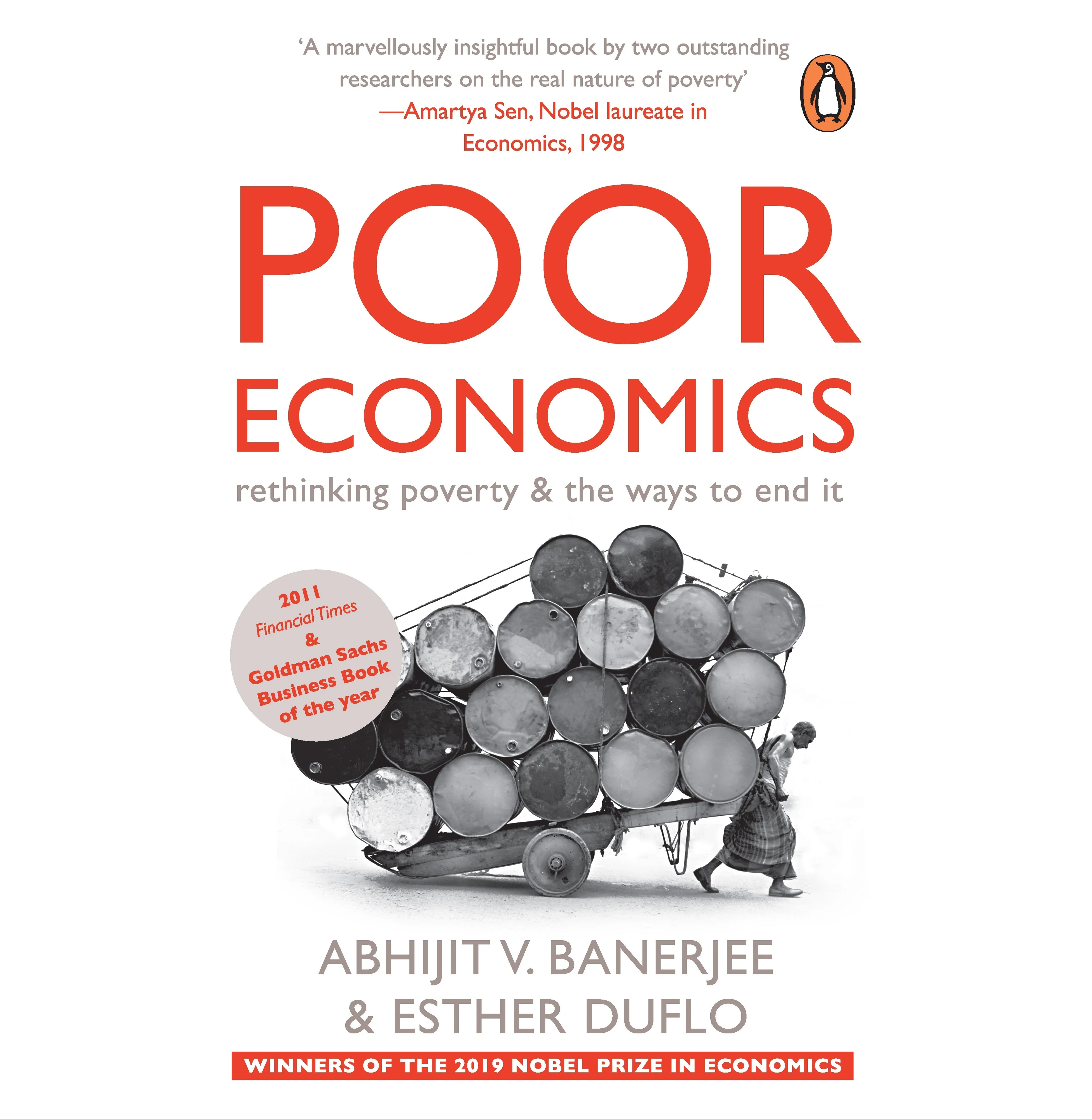
Poor Economics
Poor Economics
Poor Economics offers a clear, thoughtful look at why poverty persists and how people actually respond to money, risk, and opportunity. A landmark work in development economics, the book surveys daily choices and the policies designed to help. It is ideal for students, professionals, and curious readers who want a practical, evidence-based window into how aid can make a real difference—and it does so with a hopeful, accessible tone.
Esther Duflo and Abhijit Banerjee, in Poor Economics, draw on decades of field research with the Poverty Action Lab to confront big questions with small, real-world answers: why do families still prioritize certain purchases when money is tight? how do obstacles at home, school, or clinic shape outcomes? and what kinds of programs actually improve well-being and opportunity? Through measured experiments and vivid case studies, the book shows how thoughtful design and careful testing can reveal what works in practice.
The writing in Poor Economics is organized around questions and evidence, with accessible explanations, compelling stories, and occasional charts that illuminate complex ideas without slowing the pace. The book blends narrative and data to demonstrate how policy and philanthropy can be sharpened by rigorous evaluation, making the learning experience both engaging and applicable to real-world decision-making.
- Real-world field experiments and data from the Poverty Action Lab
- Clear explanations of key concepts like budgeting, incentives, risk, health, and education
- Practical implications for policy, philanthropy, and donor decisions
- Engaging storytelling with accessible case studies and anecdotes
- Evidence-based insights on what actually reduces poverty and how to allocate resources effectively
Reading Poor Economics leaves you with a clearer, more compassionate view of poverty and a practical lens for evaluating programs, donations, and policies. It helps you think differently about what works, why it matters, and how to contribute more effectively, long after the last page is turned.
Original: $4.56
-70%$4.56
$1.37Product Information
Product Information
Shipping & Returns
Shipping & Returns
Description
Poor Economics offers a clear, thoughtful look at why poverty persists and how people actually respond to money, risk, and opportunity. A landmark work in development economics, the book surveys daily choices and the policies designed to help. It is ideal for students, professionals, and curious readers who want a practical, evidence-based window into how aid can make a real difference—and it does so with a hopeful, accessible tone.
Esther Duflo and Abhijit Banerjee, in Poor Economics, draw on decades of field research with the Poverty Action Lab to confront big questions with small, real-world answers: why do families still prioritize certain purchases when money is tight? how do obstacles at home, school, or clinic shape outcomes? and what kinds of programs actually improve well-being and opportunity? Through measured experiments and vivid case studies, the book shows how thoughtful design and careful testing can reveal what works in practice.
The writing in Poor Economics is organized around questions and evidence, with accessible explanations, compelling stories, and occasional charts that illuminate complex ideas without slowing the pace. The book blends narrative and data to demonstrate how policy and philanthropy can be sharpened by rigorous evaluation, making the learning experience both engaging and applicable to real-world decision-making.
- Real-world field experiments and data from the Poverty Action Lab
- Clear explanations of key concepts like budgeting, incentives, risk, health, and education
- Practical implications for policy, philanthropy, and donor decisions
- Engaging storytelling with accessible case studies and anecdotes
- Evidence-based insights on what actually reduces poverty and how to allocate resources effectively
Reading Poor Economics leaves you with a clearer, more compassionate view of poverty and a practical lens for evaluating programs, donations, and policies. It helps you think differently about what works, why it matters, and how to contribute more effectively, long after the last page is turned.