The Delhi Model
The Delhi Model (Hb) - Hardback invites readers to explore how independent India began centering public education and healthcare in Delhi, detailing the economic foundations and how it stacks up against other governance models such as the Gujarat Model. This non-fiction examination is ideal for students, policymakers, journalists, and curious readers who want a clear, thoughtful look at urban governance and reform. The tone is hopeful, educational, and insightful, inviting readers to consider how policy choices shape everyday lives.
Written by Jasmine Shah, this authoritative account traces the Delhi government's reforms in six key sectors—education, health, air pollution, transport, electricity, and water—and examines the outcomes. The book is structured to move from policy ideas to real-world results, using clear chapters, data-driven analysis, and insightful case studies to show not just what changed but how it changed lives. The experience is informative yet accessible, with a steady pace that makes complex governance concepts easy to follow and relate to.
Readers will sense the human impact behind the reforms as the narrative connects policies to classrooms, clinics, buses, and households, while the author lays out the logic, trade-offs, and design principles behind a bold urban reform agenda. The Delhi Model offers a practical roadmap for translating ambition into action and for evaluating what it takes to build a more developed India.
- In-depth content elements: Delhi reforms across six sectors—education, health, air pollution, transport, electricity, and water—and how they changed service delivery, with comparisons to other governance models
- Interactive or standout features: case studies, milestones, and data-driven analysis that translate theory into real-world impact
- Learning outcomes or experiences: sharpened ability to evaluate public policy, understand the link between human capital and everyday outcomes, and think critically about governance choices
- Writing style: authoritative, clear, and accessible, backed by rigorous research
After reading The Delhi Model, readers gain a grounded understanding of how urban governance can transform lives, a framework for evaluating public services, and a hopeful, actionable vision for building a more inclusive India. The book leaves readers with a sense of possibility and responsibility to engage with public policy, equipped to assess reforms and their impact on everyday life.
Product Information
Product Information
Shipping & Returns
Shipping & Returns
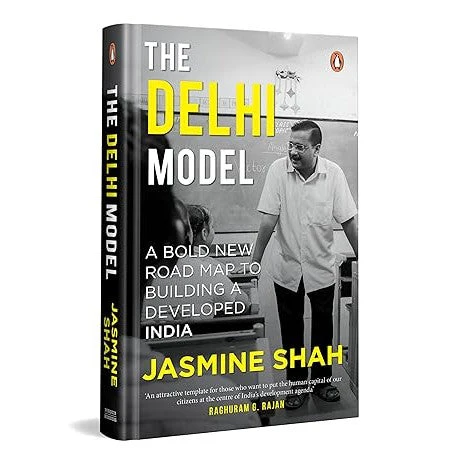
The Delhi Model
The Delhi Model
The Delhi Model (Hb) - Hardback invites readers to explore how independent India began centering public education and healthcare in Delhi, detailing the economic foundations and how it stacks up against other governance models such as the Gujarat Model. This non-fiction examination is ideal for students, policymakers, journalists, and curious readers who want a clear, thoughtful look at urban governance and reform. The tone is hopeful, educational, and insightful, inviting readers to consider how policy choices shape everyday lives.
Written by Jasmine Shah, this authoritative account traces the Delhi government's reforms in six key sectors—education, health, air pollution, transport, electricity, and water—and examines the outcomes. The book is structured to move from policy ideas to real-world results, using clear chapters, data-driven analysis, and insightful case studies to show not just what changed but how it changed lives. The experience is informative yet accessible, with a steady pace that makes complex governance concepts easy to follow and relate to.
Readers will sense the human impact behind the reforms as the narrative connects policies to classrooms, clinics, buses, and households, while the author lays out the logic, trade-offs, and design principles behind a bold urban reform agenda. The Delhi Model offers a practical roadmap for translating ambition into action and for evaluating what it takes to build a more developed India.
- In-depth content elements: Delhi reforms across six sectors—education, health, air pollution, transport, electricity, and water—and how they changed service delivery, with comparisons to other governance models
- Interactive or standout features: case studies, milestones, and data-driven analysis that translate theory into real-world impact
- Learning outcomes or experiences: sharpened ability to evaluate public policy, understand the link between human capital and everyday outcomes, and think critically about governance choices
- Writing style: authoritative, clear, and accessible, backed by rigorous research
After reading The Delhi Model, readers gain a grounded understanding of how urban governance can transform lives, a framework for evaluating public services, and a hopeful, actionable vision for building a more inclusive India. The book leaves readers with a sense of possibility and responsibility to engage with public policy, equipped to assess reforms and their impact on everyday life.
Product Information
Product Information
Shipping & Returns
Shipping & Returns
Description
The Delhi Model (Hb) - Hardback invites readers to explore how independent India began centering public education and healthcare in Delhi, detailing the economic foundations and how it stacks up against other governance models such as the Gujarat Model. This non-fiction examination is ideal for students, policymakers, journalists, and curious readers who want a clear, thoughtful look at urban governance and reform. The tone is hopeful, educational, and insightful, inviting readers to consider how policy choices shape everyday lives.
Written by Jasmine Shah, this authoritative account traces the Delhi government's reforms in six key sectors—education, health, air pollution, transport, electricity, and water—and examines the outcomes. The book is structured to move from policy ideas to real-world results, using clear chapters, data-driven analysis, and insightful case studies to show not just what changed but how it changed lives. The experience is informative yet accessible, with a steady pace that makes complex governance concepts easy to follow and relate to.
Readers will sense the human impact behind the reforms as the narrative connects policies to classrooms, clinics, buses, and households, while the author lays out the logic, trade-offs, and design principles behind a bold urban reform agenda. The Delhi Model offers a practical roadmap for translating ambition into action and for evaluating what it takes to build a more developed India.
- In-depth content elements: Delhi reforms across six sectors—education, health, air pollution, transport, electricity, and water—and how they changed service delivery, with comparisons to other governance models
- Interactive or standout features: case studies, milestones, and data-driven analysis that translate theory into real-world impact
- Learning outcomes or experiences: sharpened ability to evaluate public policy, understand the link between human capital and everyday outcomes, and think critically about governance choices
- Writing style: authoritative, clear, and accessible, backed by rigorous research
After reading The Delhi Model, readers gain a grounded understanding of how urban governance can transform lives, a framework for evaluating public services, and a hopeful, actionable vision for building a more inclusive India. The book leaves readers with a sense of possibility and responsibility to engage with public policy, equipped to assess reforms and their impact on everyday life.