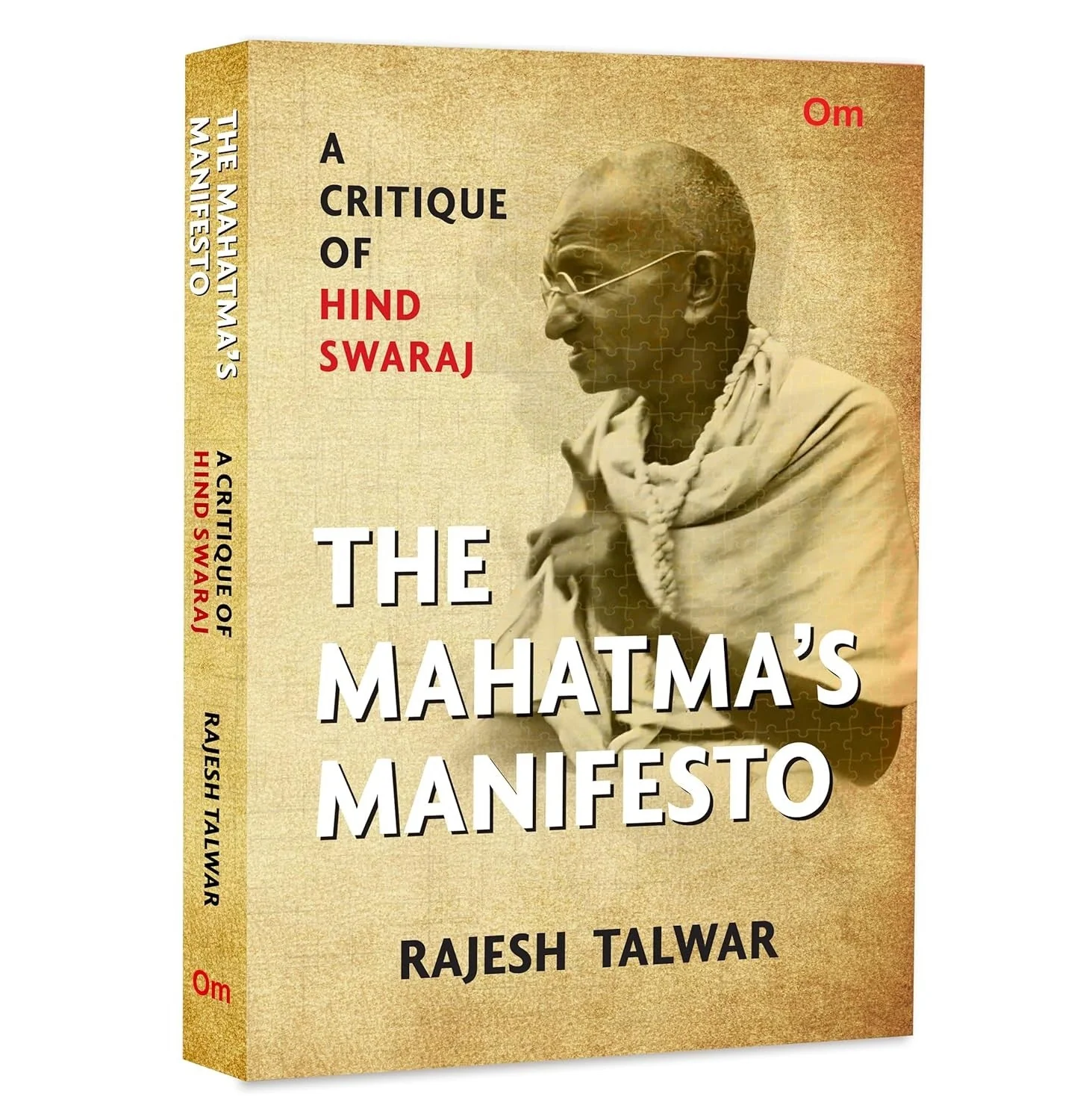
The Mahatmas Manifesto: A Critique Of Hind Swaraj
In The Mahatma’s Manifesto, Rajesh Talwar delves deep into Gandhi’s Hind Swaraj, providing a thorough critique that is both insightful and thought-provoking. Talwar doesn’t hold back as he dissects Gandhi’s vision, revealing the often idealistic and impractical elements that have been long revered.
With a clear and incisive analysis, the book sheds light on the contradictions embedded in Gandhi’s rejection of modernity and industrialization. Talwar posits that rather than serving as a noble guiding principle, Hind Swaraj presents a regressive perspective. It advocates for a return to an outdated past that overlooks the necessary complexities and possibilities of the rapidly evolving world around us.
Not stopping there, Talwar questions Gandhi’s celebrated notion of self-sufficiency. He argues that this ideal has morphed into an economically stifling fantasy, one that potentially hinders India’s growth and development in the contemporary landscape. This book is essential for anyone wanting to engage critically with historical narratives and explore the tensions between tradition and modernity.
Whether you’re a student of history, a follower of Gandhi’s philosophies, or simply someone interested in India's socio-economic debates, this book will challenge your perceptions and inspire deep reflection.
Product Information
Product Information
Shipping & Returns
Shipping & Returns
The Mahatmas Manifesto: A Critique Of Hind Swaraj
The Mahatmas Manifesto: A Critique Of Hind Swaraj
In The Mahatma’s Manifesto, Rajesh Talwar delves deep into Gandhi’s Hind Swaraj, providing a thorough critique that is both insightful and thought-provoking. Talwar doesn’t hold back as he dissects Gandhi’s vision, revealing the often idealistic and impractical elements that have been long revered.
With a clear and incisive analysis, the book sheds light on the contradictions embedded in Gandhi’s rejection of modernity and industrialization. Talwar posits that rather than serving as a noble guiding principle, Hind Swaraj presents a regressive perspective. It advocates for a return to an outdated past that overlooks the necessary complexities and possibilities of the rapidly evolving world around us.
Not stopping there, Talwar questions Gandhi’s celebrated notion of self-sufficiency. He argues that this ideal has morphed into an economically stifling fantasy, one that potentially hinders India’s growth and development in the contemporary landscape. This book is essential for anyone wanting to engage critically with historical narratives and explore the tensions between tradition and modernity.
Whether you’re a student of history, a follower of Gandhi’s philosophies, or simply someone interested in India's socio-economic debates, this book will challenge your perceptions and inspire deep reflection.
Original: $3.60
-70%$3.60
$1.08Product Information
Product Information
Shipping & Returns
Shipping & Returns
Description
In The Mahatma’s Manifesto, Rajesh Talwar delves deep into Gandhi’s Hind Swaraj, providing a thorough critique that is both insightful and thought-provoking. Talwar doesn’t hold back as he dissects Gandhi’s vision, revealing the often idealistic and impractical elements that have been long revered.
With a clear and incisive analysis, the book sheds light on the contradictions embedded in Gandhi’s rejection of modernity and industrialization. Talwar posits that rather than serving as a noble guiding principle, Hind Swaraj presents a regressive perspective. It advocates for a return to an outdated past that overlooks the necessary complexities and possibilities of the rapidly evolving world around us.
Not stopping there, Talwar questions Gandhi’s celebrated notion of self-sufficiency. He argues that this ideal has morphed into an economically stifling fantasy, one that potentially hinders India’s growth and development in the contemporary landscape. This book is essential for anyone wanting to engage critically with historical narratives and explore the tensions between tradition and modernity.
Whether you’re a student of history, a follower of Gandhi’s philosophies, or simply someone interested in India's socio-economic debates, this book will challenge your perceptions and inspire deep reflection.