The Stasi Poetry Circle
Set against Berlin in 1982, The Stasi Poetry Circle uncovers how East Germany's Ministry for State Security tried to weaponize culture—but instead unlocked a quiet revolution of the mind. This is historical nonfiction that reads with the suspense of a spy thriller, perfect for readers who love history, politics, and the power of language. Whether you’re curious about life behind the Iron Curtain or drawn to stories of resilience and art under pressure, this book speaks to curious minds of all ages and interests.
In The Stasi Poetry Circle, the book blends unseen archival material with exclusive interviews from surviving members to recount the Working Group of Writing Chekists—a clandestine book club of spies, soldiers, and border guards who gathered in classrooms lined with Lenin's portraits to study meter, rhetoric, and craft. Philip Oltermann guides you through each surprising turn with warmth and clarity, anchoring historical events in intimate moments—the quiet rhythm of a poem, the tension of a corridor, and the unexpected joy of words shaping thought more than weapons. The narrative foregrounds key ideas about creativity as resistance, how poetry can illuminate truth, and the resilience of the human spirit under surveillance.
- True account of the Stasi's clandestine poetry circle and its diverse members
- Set in 1982 Berlin against the Cold War backdrop and the threat of nuclear conflict
- Exclusive interviews with surviving participants and unseen archival materials
- Narrative nonfiction with vivid, scene-rich prose and careful historical grounding
- Explores themes of creativity, doubt, and resilience in an oppressive regime
- Literary rhythm and craft-focused observations on poetry and rhetoric
Reading The Stasi Poetry Circle reveals how art can outlive oppression, offering readers a sense of hope and a sharpened perspective on power, surveillance, and the courage to think differently. This moving narrative leaves you inspired by the resilience of the human spirit and the enduring value of words.
Product Information
Product Information
Shipping & Returns
Shipping & Returns
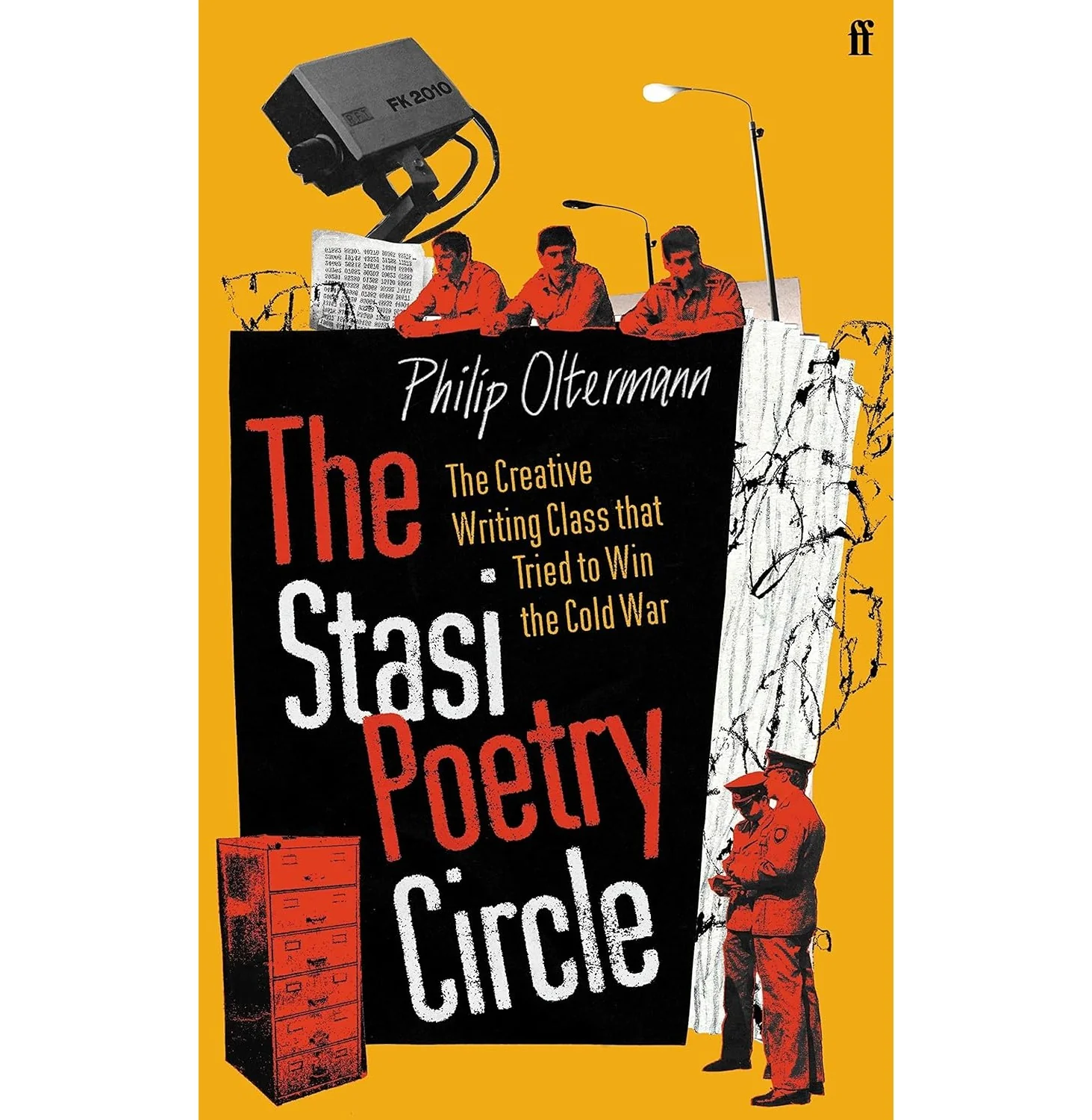
The Stasi Poetry Circle
The Stasi Poetry Circle
Set against Berlin in 1982, The Stasi Poetry Circle uncovers how East Germany's Ministry for State Security tried to weaponize culture—but instead unlocked a quiet revolution of the mind. This is historical nonfiction that reads with the suspense of a spy thriller, perfect for readers who love history, politics, and the power of language. Whether you’re curious about life behind the Iron Curtain or drawn to stories of resilience and art under pressure, this book speaks to curious minds of all ages and interests.
In The Stasi Poetry Circle, the book blends unseen archival material with exclusive interviews from surviving members to recount the Working Group of Writing Chekists—a clandestine book club of spies, soldiers, and border guards who gathered in classrooms lined with Lenin's portraits to study meter, rhetoric, and craft. Philip Oltermann guides you through each surprising turn with warmth and clarity, anchoring historical events in intimate moments—the quiet rhythm of a poem, the tension of a corridor, and the unexpected joy of words shaping thought more than weapons. The narrative foregrounds key ideas about creativity as resistance, how poetry can illuminate truth, and the resilience of the human spirit under surveillance.
- True account of the Stasi's clandestine poetry circle and its diverse members
- Set in 1982 Berlin against the Cold War backdrop and the threat of nuclear conflict
- Exclusive interviews with surviving participants and unseen archival materials
- Narrative nonfiction with vivid, scene-rich prose and careful historical grounding
- Explores themes of creativity, doubt, and resilience in an oppressive regime
- Literary rhythm and craft-focused observations on poetry and rhetoric
Reading The Stasi Poetry Circle reveals how art can outlive oppression, offering readers a sense of hope and a sharpened perspective on power, surveillance, and the courage to think differently. This moving narrative leaves you inspired by the resilience of the human spirit and the enduring value of words.
Original: $7.30
-70%$7.30
$2.19Product Information
Product Information
Shipping & Returns
Shipping & Returns
Description
Set against Berlin in 1982, The Stasi Poetry Circle uncovers how East Germany's Ministry for State Security tried to weaponize culture—but instead unlocked a quiet revolution of the mind. This is historical nonfiction that reads with the suspense of a spy thriller, perfect for readers who love history, politics, and the power of language. Whether you’re curious about life behind the Iron Curtain or drawn to stories of resilience and art under pressure, this book speaks to curious minds of all ages and interests.
In The Stasi Poetry Circle, the book blends unseen archival material with exclusive interviews from surviving members to recount the Working Group of Writing Chekists—a clandestine book club of spies, soldiers, and border guards who gathered in classrooms lined with Lenin's portraits to study meter, rhetoric, and craft. Philip Oltermann guides you through each surprising turn with warmth and clarity, anchoring historical events in intimate moments—the quiet rhythm of a poem, the tension of a corridor, and the unexpected joy of words shaping thought more than weapons. The narrative foregrounds key ideas about creativity as resistance, how poetry can illuminate truth, and the resilience of the human spirit under surveillance.
- True account of the Stasi's clandestine poetry circle and its diverse members
- Set in 1982 Berlin against the Cold War backdrop and the threat of nuclear conflict
- Exclusive interviews with surviving participants and unseen archival materials
- Narrative nonfiction with vivid, scene-rich prose and careful historical grounding
- Explores themes of creativity, doubt, and resilience in an oppressive regime
- Literary rhythm and craft-focused observations on poetry and rhetoric
Reading The Stasi Poetry Circle reveals how art can outlive oppression, offering readers a sense of hope and a sharpened perspective on power, surveillance, and the courage to think differently. This moving narrative leaves you inspired by the resilience of the human spirit and the enduring value of words.