Unequal: Why India Lags Behind Its Neighbours
Unequal: Why India Lags Behind Its Neighbours examines the moral economy of India's elite and the social and economic gaps that hold the country back. This rigorous non-fiction study distills five years of field research across India, Bangladesh, Nepal, and Sri Lanka to reveal how health, nutrition, education, and sanitation shape longevity and opportunity. Written for readers who care about South Asia—students, policymakers, and curious lifelong learners—Unequal offers a thoughtful, hopeful look at what progress might require and why it matters.
Structured around cross-country comparisons and grounded in firsthand fieldwork, the book blends hard data with human stories. It foregrounds the realities of everyday life—how disparities in land reform, investment in public services, and social movements around caste and gender influence outcomes today. The writing is rigorous yet approachable, making complex concepts accessible without sacrificing nuance.
With a foreword by Jean Drèze and endorsements from P. Sainath and Jayati Ghosh, Unequal invites readers to see beyond headlines. It outlines key concepts such as health and nutrition as determinants of longevity, the role of education and sanitation in human development, and the power of policy choices to transform lives. The narrative moves at a thoughtful pace, weaving data, case studies, and clear implications for policy and practice.
- Five-year cross-country study across India, Bangladesh, Nepal, and Sri Lanka
- Deep dive into health, nutrition, education, sanitation, and longevity
- Clear comparisons showing how neighboring countries outpace India on social indicators
- Policy-focused analysis with practical recommendations
- Foreword by Jean Drèze and endorsements from P. Sainath and Jayati Ghosh
- Accessible, data-driven storytelling with case studies
- Emphasis on land reform, education and healthcare investments, and gender and caste equality
After finishing Unequal, readers will leave with a sharper understanding of how policy translates into daily life and opportunity, and a renewed sense of possibility for South Asia's future. It offers a hopeful roadmap for change and invites readers to think differently about development—and to act toward a more equitable tomorrow.
Product Information
Product Information
Shipping & Returns
Shipping & Returns
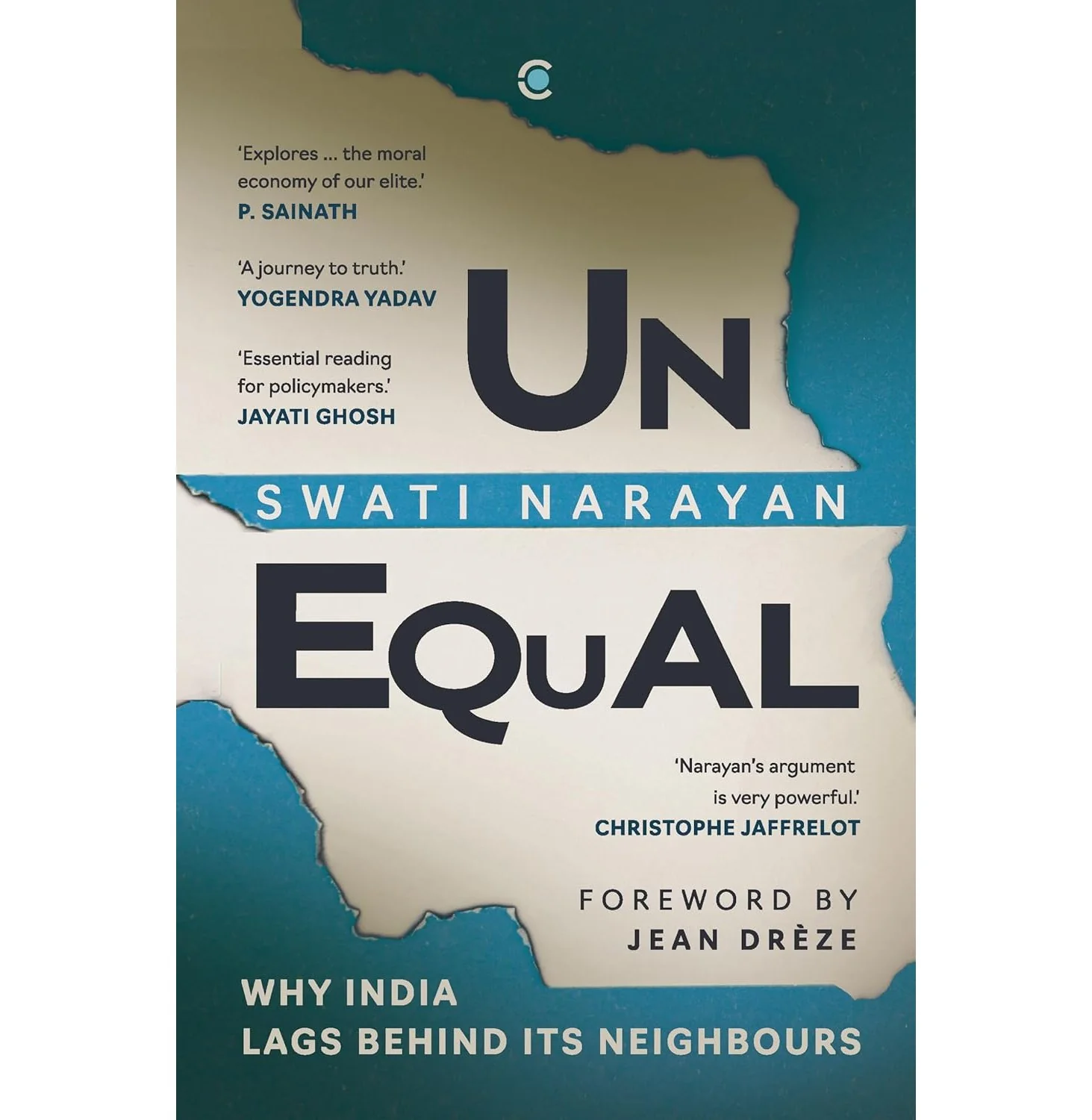
Unequal: Why India Lags Behind Its Neighbours
Unequal: Why India Lags Behind Its Neighbours
Unequal: Why India Lags Behind Its Neighbours examines the moral economy of India's elite and the social and economic gaps that hold the country back. This rigorous non-fiction study distills five years of field research across India, Bangladesh, Nepal, and Sri Lanka to reveal how health, nutrition, education, and sanitation shape longevity and opportunity. Written for readers who care about South Asia—students, policymakers, and curious lifelong learners—Unequal offers a thoughtful, hopeful look at what progress might require and why it matters.
Structured around cross-country comparisons and grounded in firsthand fieldwork, the book blends hard data with human stories. It foregrounds the realities of everyday life—how disparities in land reform, investment in public services, and social movements around caste and gender influence outcomes today. The writing is rigorous yet approachable, making complex concepts accessible without sacrificing nuance.
With a foreword by Jean Drèze and endorsements from P. Sainath and Jayati Ghosh, Unequal invites readers to see beyond headlines. It outlines key concepts such as health and nutrition as determinants of longevity, the role of education and sanitation in human development, and the power of policy choices to transform lives. The narrative moves at a thoughtful pace, weaving data, case studies, and clear implications for policy and practice.
- Five-year cross-country study across India, Bangladesh, Nepal, and Sri Lanka
- Deep dive into health, nutrition, education, sanitation, and longevity
- Clear comparisons showing how neighboring countries outpace India on social indicators
- Policy-focused analysis with practical recommendations
- Foreword by Jean Drèze and endorsements from P. Sainath and Jayati Ghosh
- Accessible, data-driven storytelling with case studies
- Emphasis on land reform, education and healthcare investments, and gender and caste equality
After finishing Unequal, readers will leave with a sharper understanding of how policy translates into daily life and opportunity, and a renewed sense of possibility for South Asia's future. It offers a hopeful roadmap for change and invites readers to think differently about development—and to act toward a more equitable tomorrow.
Original: $7.30
-70%$7.30
$2.19Product Information
Product Information
Shipping & Returns
Shipping & Returns
Description
Unequal: Why India Lags Behind Its Neighbours examines the moral economy of India's elite and the social and economic gaps that hold the country back. This rigorous non-fiction study distills five years of field research across India, Bangladesh, Nepal, and Sri Lanka to reveal how health, nutrition, education, and sanitation shape longevity and opportunity. Written for readers who care about South Asia—students, policymakers, and curious lifelong learners—Unequal offers a thoughtful, hopeful look at what progress might require and why it matters.
Structured around cross-country comparisons and grounded in firsthand fieldwork, the book blends hard data with human stories. It foregrounds the realities of everyday life—how disparities in land reform, investment in public services, and social movements around caste and gender influence outcomes today. The writing is rigorous yet approachable, making complex concepts accessible without sacrificing nuance.
With a foreword by Jean Drèze and endorsements from P. Sainath and Jayati Ghosh, Unequal invites readers to see beyond headlines. It outlines key concepts such as health and nutrition as determinants of longevity, the role of education and sanitation in human development, and the power of policy choices to transform lives. The narrative moves at a thoughtful pace, weaving data, case studies, and clear implications for policy and practice.
- Five-year cross-country study across India, Bangladesh, Nepal, and Sri Lanka
- Deep dive into health, nutrition, education, sanitation, and longevity
- Clear comparisons showing how neighboring countries outpace India on social indicators
- Policy-focused analysis with practical recommendations
- Foreword by Jean Drèze and endorsements from P. Sainath and Jayati Ghosh
- Accessible, data-driven storytelling with case studies
- Emphasis on land reform, education and healthcare investments, and gender and caste equality
After finishing Unequal, readers will leave with a sharper understanding of how policy translates into daily life and opportunity, and a renewed sense of possibility for South Asia's future. It offers a hopeful roadmap for change and invites readers to think differently about development—and to act toward a more equitable tomorrow.