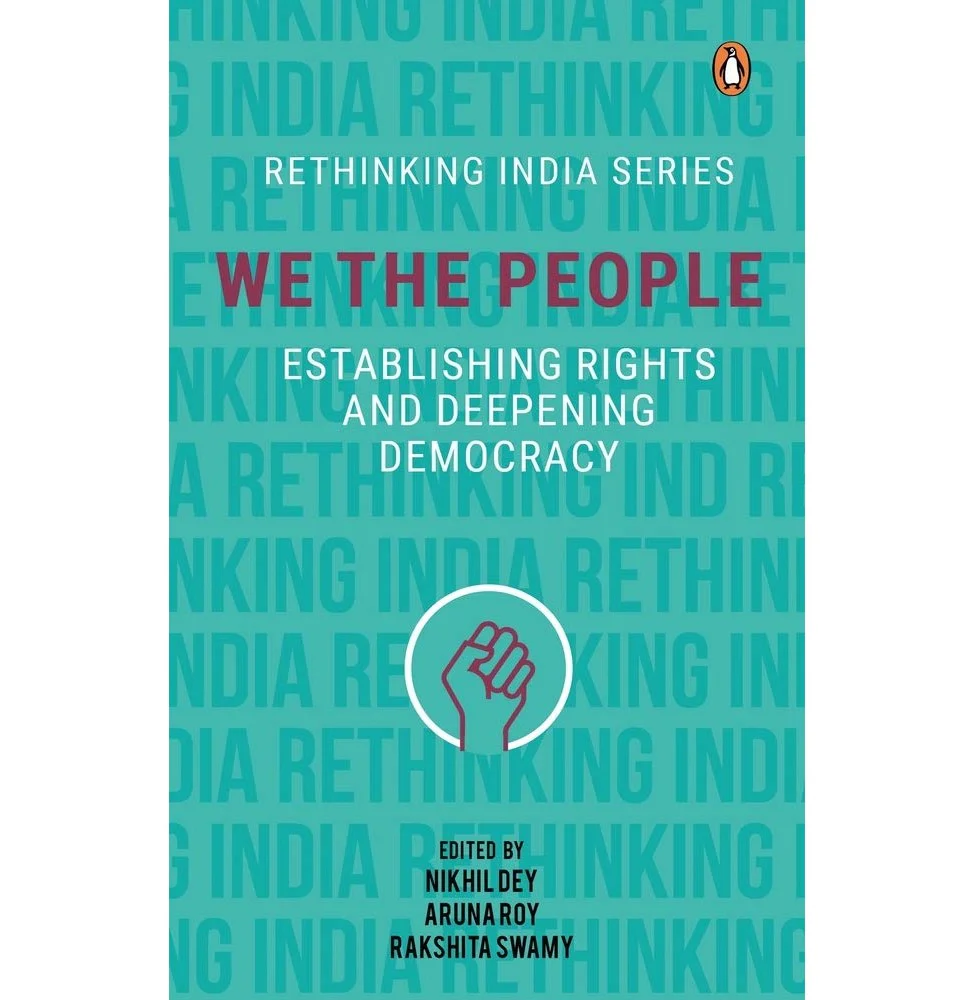
We The People: Rethinking India
We The People: Rethinking India (Vol.4) invites readers to explore the heart of Indian democracy through a thoughtful collection of essays that connect the rights guaranteed by the Constitution to the everyday lives of India's diverse people. This non-fiction volume brings together respected academics, committed activists, and practitioners with deep ties to social movements, offering a clear, engaging roadmap for understanding how universal rights become tangible entitlements in India. Written for students, researchers, policymakers, and curious readers interested in justice, equity, and public life, the book carries a hopeful, purposeful tone that invites thoughtful reflection and real-world consideration.
Structured as a collection of essays, the book grounds its analysis in a rights-based framework rooted in the Indian Constitution. It blends theoretical insight with lived experiences from social movements, illustrating how rights evolve from principle to practice and how citizens, state, society, and the market interact in modern India. The experience is both rigorous and accessible, with narratives, case studies, and thoughtful critique that invite readers to see development through a more inclusive lens. The contributors present innovative alternatives crafted by people’s collectives and challenge the idea that progress equals profit, offering readers a fresh perspective on what a fair, democratic society can look like.
Whether you approach it as a scholarly study or a field guide for civic engagement, this volume maintains a warm, inviting voice. It moves readers through concepts of rights, entitlements, and governance with clarity, and it highlights the ongoing struggles to realize economic, cultural, and social rights in everyday life. By weaving voices from academia, activism, and practice, We The People: Rethinking India (Vol.4) becomes not just a set of arguments but a conversation about democracy in action.
- Rights-based framework anchored in the Indian Constitution
- Essays from academics, activists, and practitioners
- Real-world case studies and movement narratives
- Analysis of citizen–state–society–market dynamics
- Innovative alternatives by people’s collectives to development
- Accessible, engaging writing that invites dialogue
After reading We The People: Rethinking India (Vol.4), readers gain a deeper understanding of democracy in practice, a renewed sense of civic possibility, and a framework for thinking about justice and equity that can inform action and policy long after the last page. It leaves you inspired to engage, question, and participate in shaping a more inclusive future.
Product Information
Product Information
Shipping & Returns
Shipping & Returns
We The People: Rethinking India
We The People: Rethinking India
We The People: Rethinking India (Vol.4) invites readers to explore the heart of Indian democracy through a thoughtful collection of essays that connect the rights guaranteed by the Constitution to the everyday lives of India's diverse people. This non-fiction volume brings together respected academics, committed activists, and practitioners with deep ties to social movements, offering a clear, engaging roadmap for understanding how universal rights become tangible entitlements in India. Written for students, researchers, policymakers, and curious readers interested in justice, equity, and public life, the book carries a hopeful, purposeful tone that invites thoughtful reflection and real-world consideration.
Structured as a collection of essays, the book grounds its analysis in a rights-based framework rooted in the Indian Constitution. It blends theoretical insight with lived experiences from social movements, illustrating how rights evolve from principle to practice and how citizens, state, society, and the market interact in modern India. The experience is both rigorous and accessible, with narratives, case studies, and thoughtful critique that invite readers to see development through a more inclusive lens. The contributors present innovative alternatives crafted by people’s collectives and challenge the idea that progress equals profit, offering readers a fresh perspective on what a fair, democratic society can look like.
Whether you approach it as a scholarly study or a field guide for civic engagement, this volume maintains a warm, inviting voice. It moves readers through concepts of rights, entitlements, and governance with clarity, and it highlights the ongoing struggles to realize economic, cultural, and social rights in everyday life. By weaving voices from academia, activism, and practice, We The People: Rethinking India (Vol.4) becomes not just a set of arguments but a conversation about democracy in action.
- Rights-based framework anchored in the Indian Constitution
- Essays from academics, activists, and practitioners
- Real-world case studies and movement narratives
- Analysis of citizen–state–society–market dynamics
- Innovative alternatives by people’s collectives to development
- Accessible, engaging writing that invites dialogue
After reading We The People: Rethinking India (Vol.4), readers gain a deeper understanding of democracy in practice, a renewed sense of civic possibility, and a framework for thinking about justice and equity that can inform action and policy long after the last page. It leaves you inspired to engage, question, and participate in shaping a more inclusive future.
Product Information
Product Information
Shipping & Returns
Shipping & Returns
Description
We The People: Rethinking India (Vol.4) invites readers to explore the heart of Indian democracy through a thoughtful collection of essays that connect the rights guaranteed by the Constitution to the everyday lives of India's diverse people. This non-fiction volume brings together respected academics, committed activists, and practitioners with deep ties to social movements, offering a clear, engaging roadmap for understanding how universal rights become tangible entitlements in India. Written for students, researchers, policymakers, and curious readers interested in justice, equity, and public life, the book carries a hopeful, purposeful tone that invites thoughtful reflection and real-world consideration.
Structured as a collection of essays, the book grounds its analysis in a rights-based framework rooted in the Indian Constitution. It blends theoretical insight with lived experiences from social movements, illustrating how rights evolve from principle to practice and how citizens, state, society, and the market interact in modern India. The experience is both rigorous and accessible, with narratives, case studies, and thoughtful critique that invite readers to see development through a more inclusive lens. The contributors present innovative alternatives crafted by people’s collectives and challenge the idea that progress equals profit, offering readers a fresh perspective on what a fair, democratic society can look like.
Whether you approach it as a scholarly study or a field guide for civic engagement, this volume maintains a warm, inviting voice. It moves readers through concepts of rights, entitlements, and governance with clarity, and it highlights the ongoing struggles to realize economic, cultural, and social rights in everyday life. By weaving voices from academia, activism, and practice, We The People: Rethinking India (Vol.4) becomes not just a set of arguments but a conversation about democracy in action.
- Rights-based framework anchored in the Indian Constitution
- Essays from academics, activists, and practitioners
- Real-world case studies and movement narratives
- Analysis of citizen–state–society–market dynamics
- Innovative alternatives by people’s collectives to development
- Accessible, engaging writing that invites dialogue
After reading We The People: Rethinking India (Vol.4), readers gain a deeper understanding of democracy in practice, a renewed sense of civic possibility, and a framework for thinking about justice and equity that can inform action and policy long after the last page. It leaves you inspired to engage, question, and participate in shaping a more inclusive future.