Whole Numbers And Half Truths: What Data Can And Cannot Tell Us About Modern India
Whole Numbers And Half Truths: What Data Can And Cannot Tell Us About Modern India offers a clear, compelling look at the complexities shaping today’s India. This non-fiction, data-journalism work surveys urbanization, the vibrant middle class, and the social issues that often defy quick headlines. Written for curious readers who want to understand the country beyond soundbites—including students, policy watchers, and engaged readers—the tone is thoughtful, hopeful, and educational.
Rukmini S., with nearly two decades of on-the-ground reporting, threads hard numbers with vivid anecdotes from experts and ordinary citizens. Whole Numbers And Half Truths is organized around big questions—what the country’s urban footprint really looks like, how the middle class is changing daily life, and which issues shape public conversation. The experience is engaging because the data are anchored in human stories, turning statistics into context that helps you see the magnitude of India’s shifts. The book presents its content through narrative storytelling, concise analysis, and accessible explanations that keep pace without sacrificing depth. In Whole Numbers And Half Truths, S demonstrates how data can illuminate real-world dynamics rather than just sit in charts.
If you’re exploring non-fiction or educational reading, you’ll encounter key concepts explained with clarity: the urban footprint—roughly 31% of Indians live in cities; the paradox of a fast-growing middle class alongside ongoing social challenges; and how living standards are measured, with real examples like the fact that only those spending over Rs 8,500 a month enter the top 5 percent in urban areas. The book also looks at voter priorities and the importance of caste representation in elections. All of this is presented to illuminate what data can reveal—and what it cannot—about modern India.
- Key content elements: urbanization trends, middle-class dynamics, social issues, and the political landscape.
- Interactive or standout features: real-world anecdotes from experts and ordinary people that anchor the data in everyday life.
- Learning outcomes or experiences: develops the ability to read statistics critically and understand what data can and cannot tell us about society.
- Writing or illustration style: rigorous, accessible data journalism told through a warm, narrative voice.
After finishing Whole Numbers And Half Truths: What Data Can And Cannot Tell Us About Modern India, readers gain a clearer, more nuanced view of modern India—able to read statistics with curiosity and thoughtful skepticism, and ready to engage in data-driven conversations with confidence.
Product Information
Product Information
Shipping & Returns
Shipping & Returns
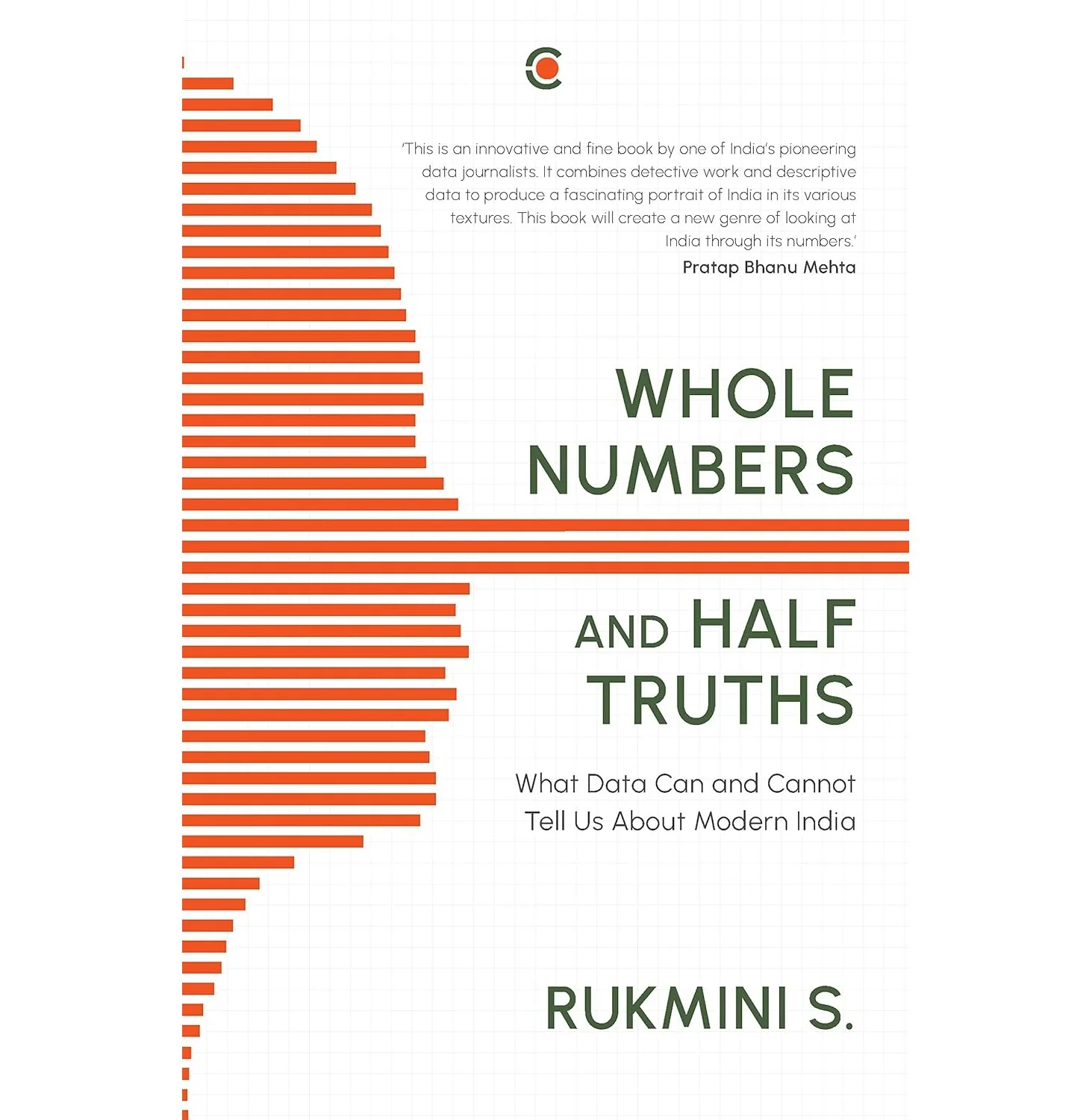
Whole Numbers And Half Truths: What Data Can And Cannot Tell Us About Modern India
Whole Numbers And Half Truths: What Data Can And Cannot Tell Us About Modern India
Whole Numbers And Half Truths: What Data Can And Cannot Tell Us About Modern India offers a clear, compelling look at the complexities shaping today’s India. This non-fiction, data-journalism work surveys urbanization, the vibrant middle class, and the social issues that often defy quick headlines. Written for curious readers who want to understand the country beyond soundbites—including students, policy watchers, and engaged readers—the tone is thoughtful, hopeful, and educational.
Rukmini S., with nearly two decades of on-the-ground reporting, threads hard numbers with vivid anecdotes from experts and ordinary citizens. Whole Numbers And Half Truths is organized around big questions—what the country’s urban footprint really looks like, how the middle class is changing daily life, and which issues shape public conversation. The experience is engaging because the data are anchored in human stories, turning statistics into context that helps you see the magnitude of India’s shifts. The book presents its content through narrative storytelling, concise analysis, and accessible explanations that keep pace without sacrificing depth. In Whole Numbers And Half Truths, S demonstrates how data can illuminate real-world dynamics rather than just sit in charts.
If you’re exploring non-fiction or educational reading, you’ll encounter key concepts explained with clarity: the urban footprint—roughly 31% of Indians live in cities; the paradox of a fast-growing middle class alongside ongoing social challenges; and how living standards are measured, with real examples like the fact that only those spending over Rs 8,500 a month enter the top 5 percent in urban areas. The book also looks at voter priorities and the importance of caste representation in elections. All of this is presented to illuminate what data can reveal—and what it cannot—about modern India.
- Key content elements: urbanization trends, middle-class dynamics, social issues, and the political landscape.
- Interactive or standout features: real-world anecdotes from experts and ordinary people that anchor the data in everyday life.
- Learning outcomes or experiences: develops the ability to read statistics critically and understand what data can and cannot tell us about society.
- Writing or illustration style: rigorous, accessible data journalism told through a warm, narrative voice.
After finishing Whole Numbers And Half Truths: What Data Can And Cannot Tell Us About Modern India, readers gain a clearer, more nuanced view of modern India—able to read statistics with curiosity and thoughtful skepticism, and ready to engage in data-driven conversations with confidence.
Product Information
Product Information
Shipping & Returns
Shipping & Returns
Description
Whole Numbers And Half Truths: What Data Can And Cannot Tell Us About Modern India offers a clear, compelling look at the complexities shaping today’s India. This non-fiction, data-journalism work surveys urbanization, the vibrant middle class, and the social issues that often defy quick headlines. Written for curious readers who want to understand the country beyond soundbites—including students, policy watchers, and engaged readers—the tone is thoughtful, hopeful, and educational.
Rukmini S., with nearly two decades of on-the-ground reporting, threads hard numbers with vivid anecdotes from experts and ordinary citizens. Whole Numbers And Half Truths is organized around big questions—what the country’s urban footprint really looks like, how the middle class is changing daily life, and which issues shape public conversation. The experience is engaging because the data are anchored in human stories, turning statistics into context that helps you see the magnitude of India’s shifts. The book presents its content through narrative storytelling, concise analysis, and accessible explanations that keep pace without sacrificing depth. In Whole Numbers And Half Truths, S demonstrates how data can illuminate real-world dynamics rather than just sit in charts.
If you’re exploring non-fiction or educational reading, you’ll encounter key concepts explained with clarity: the urban footprint—roughly 31% of Indians live in cities; the paradox of a fast-growing middle class alongside ongoing social challenges; and how living standards are measured, with real examples like the fact that only those spending over Rs 8,500 a month enter the top 5 percent in urban areas. The book also looks at voter priorities and the importance of caste representation in elections. All of this is presented to illuminate what data can reveal—and what it cannot—about modern India.
- Key content elements: urbanization trends, middle-class dynamics, social issues, and the political landscape.
- Interactive or standout features: real-world anecdotes from experts and ordinary people that anchor the data in everyday life.
- Learning outcomes or experiences: develops the ability to read statistics critically and understand what data can and cannot tell us about society.
- Writing or illustration style: rigorous, accessible data journalism told through a warm, narrative voice.
After finishing Whole Numbers And Half Truths: What Data Can And Cannot Tell Us About Modern India, readers gain a clearer, more nuanced view of modern India—able to read statistics with curiosity and thoughtful skepticism, and ready to engage in data-driven conversations with confidence.