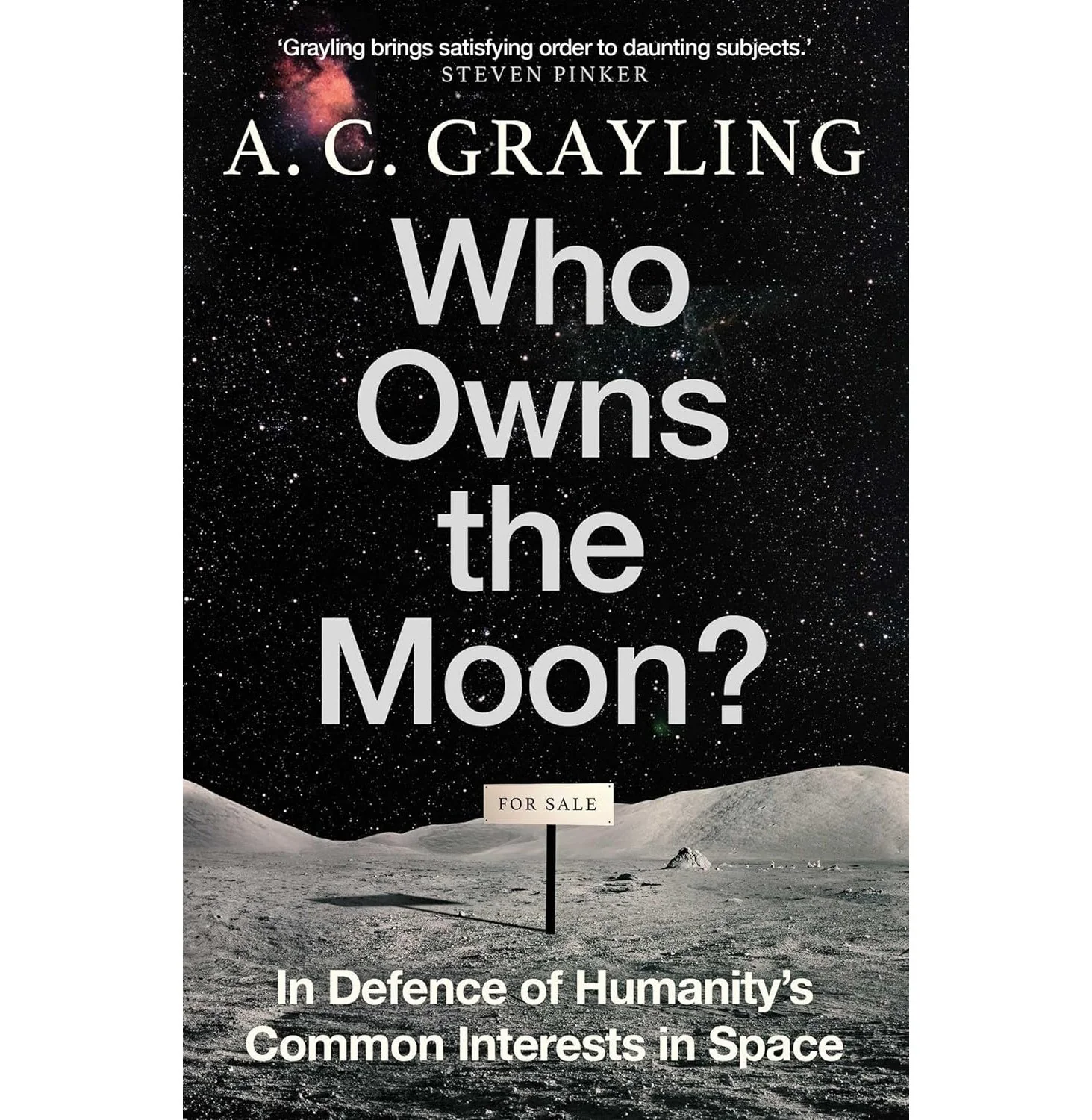
Who Owns The Moon?
This is a rigorous non-fiction examination of space governance and planetary ethics. It traces the arc from feudal commons and the law of the sea to today’s terra nullius debates, asking who would truly own the Moon, Mars, and other near-space bodies while highlighting our shared responsibilities to life on Earth. Intended for policy-minded readers, students, and curious adults, the tone is thoughtful, timely, and provocative.
The content blends historical analysis with contemporary policy discussion, presenting space-resource questions through legal frameworks, ethical considerations, and practical scenarios. It offers a bold argument for a global consensus that protects the rights of everyone on this planet. Learning emerges from careful reasoning, clear definitions, and connections to real-world debates about resource access, environmental stewardship, and international cooperation.
Readers engage through a structured, idea-driven approach that invites reflection. The book moves smoothly from historical precedents to modern dilemmas, making complex topics accessible without sacrificing rigor. It challenges you to weigh competing claims, consider governance models, and imagine policies that balance innovation with shared responsibility.
- Key content elements: historical arc from land to sea to space; terra nullius concepts; tragedy of the commons; space-resource claims; proposals for global governance; ethical considerations
- Learning outcomes: understanding how international law could govern outer space; ability to articulate policy positions; evaluation of fairness and sustainability
- Writing style: clear, precise, and engaging prose that is balanced and accessible to non-specialists
- Interactive features: thought-provoking questions, structured sections that guide readers to weigh competing claims, and relevance through contemporary case discussions
After reading, you’ll gain a grounded framework for discussing and shaping responsible space governance, a deeper appreciation for Earth’s shared future, and the confidence to participate in policy conversations about the next era of exploration.
Product Information
Product Information
Shipping & Returns
Shipping & Returns
Who Owns The Moon?
Who Owns The Moon?
This is a rigorous non-fiction examination of space governance and planetary ethics. It traces the arc from feudal commons and the law of the sea to today’s terra nullius debates, asking who would truly own the Moon, Mars, and other near-space bodies while highlighting our shared responsibilities to life on Earth. Intended for policy-minded readers, students, and curious adults, the tone is thoughtful, timely, and provocative.
The content blends historical analysis with contemporary policy discussion, presenting space-resource questions through legal frameworks, ethical considerations, and practical scenarios. It offers a bold argument for a global consensus that protects the rights of everyone on this planet. Learning emerges from careful reasoning, clear definitions, and connections to real-world debates about resource access, environmental stewardship, and international cooperation.
Readers engage through a structured, idea-driven approach that invites reflection. The book moves smoothly from historical precedents to modern dilemmas, making complex topics accessible without sacrificing rigor. It challenges you to weigh competing claims, consider governance models, and imagine policies that balance innovation with shared responsibility.
- Key content elements: historical arc from land to sea to space; terra nullius concepts; tragedy of the commons; space-resource claims; proposals for global governance; ethical considerations
- Learning outcomes: understanding how international law could govern outer space; ability to articulate policy positions; evaluation of fairness and sustainability
- Writing style: clear, precise, and engaging prose that is balanced and accessible to non-specialists
- Interactive features: thought-provoking questions, structured sections that guide readers to weigh competing claims, and relevance through contemporary case discussions
After reading, you’ll gain a grounded framework for discussing and shaping responsible space governance, a deeper appreciation for Earth’s shared future, and the confidence to participate in policy conversations about the next era of exploration.
Product Information
Product Information
Shipping & Returns
Shipping & Returns
Description
This is a rigorous non-fiction examination of space governance and planetary ethics. It traces the arc from feudal commons and the law of the sea to today’s terra nullius debates, asking who would truly own the Moon, Mars, and other near-space bodies while highlighting our shared responsibilities to life on Earth. Intended for policy-minded readers, students, and curious adults, the tone is thoughtful, timely, and provocative.
The content blends historical analysis with contemporary policy discussion, presenting space-resource questions through legal frameworks, ethical considerations, and practical scenarios. It offers a bold argument for a global consensus that protects the rights of everyone on this planet. Learning emerges from careful reasoning, clear definitions, and connections to real-world debates about resource access, environmental stewardship, and international cooperation.
Readers engage through a structured, idea-driven approach that invites reflection. The book moves smoothly from historical precedents to modern dilemmas, making complex topics accessible without sacrificing rigor. It challenges you to weigh competing claims, consider governance models, and imagine policies that balance innovation with shared responsibility.
- Key content elements: historical arc from land to sea to space; terra nullius concepts; tragedy of the commons; space-resource claims; proposals for global governance; ethical considerations
- Learning outcomes: understanding how international law could govern outer space; ability to articulate policy positions; evaluation of fairness and sustainability
- Writing style: clear, precise, and engaging prose that is balanced and accessible to non-specialists
- Interactive features: thought-provoking questions, structured sections that guide readers to weigh competing claims, and relevance through contemporary case discussions
After reading, you’ll gain a grounded framework for discussing and shaping responsible space governance, a deeper appreciation for Earth’s shared future, and the confidence to participate in policy conversations about the next era of exploration.